Cynicism (philosophy)
Videos
Cynicism is a school of thought in ancient Greek philosophy, originating in the Classical period and extending into the Hellenistic and Roman Imperial periods. According to Cynicism, people are reason
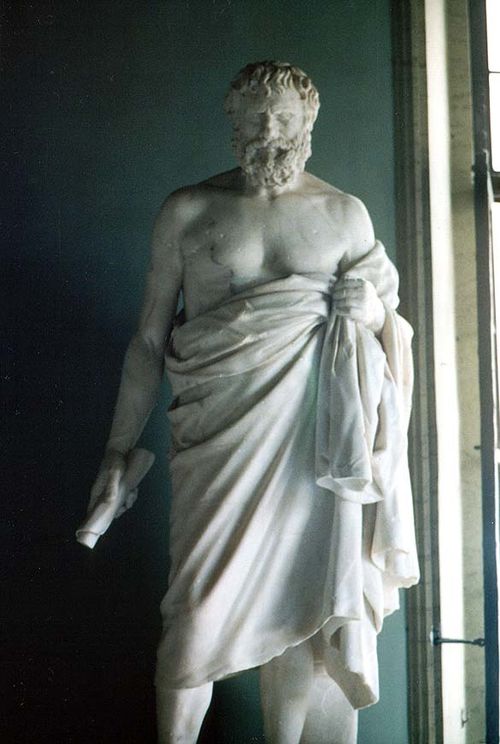
Statue of an unknown Cynic philosopher from the Capitoline Museums in Rome. This statue is a Roman-era copy of an earlier Greek statue from the third century BC. The scroll in his right hand is an 18th-century restoration.[citation needed]

The Cynics adopted Heracles, shown here in this gilded bronze statue from the second century AD, as their patron hero.

Bust of Antisthenes

Diogenes Searching for an Honest Man (c. 1780) attributed to J. H. W. Tischbein
Diogenes
Videos
Diogenes the Cynic, also known as Diogenes of Sinope, was an ancient Greek philosopher during the period of Classical Greece, and one of the founders of Cynicism.
Cynicism (philosophy)
…in public. The first philosopher to outline these themes was Antisthenes, who had been a pupil of Socrates in the late 400s BC. He was followed by Diogenes, who lived in a ceramic jar on the streets of Athens. Diogenes took Cynicism to its logical extremes with his famous public demonstrations of non-conformity…

Ancient Roman mosaic depicting Diogenes (2nd or 3rd century AD)

Alexander and Diogenes, by Gaspar de Crayer (c. 1630)

Diogenes, by Jules Bastien-Lepage (1873)