Dál Riata
Videos
Dál Riata or Dál Riada was a Gaelic kingdom that encompassed the western seaboard of Scotland and north-eastern Ireland, on each side of the North Channel. At its height in the 6th and 7th centuries,

Dunadd Hillfort
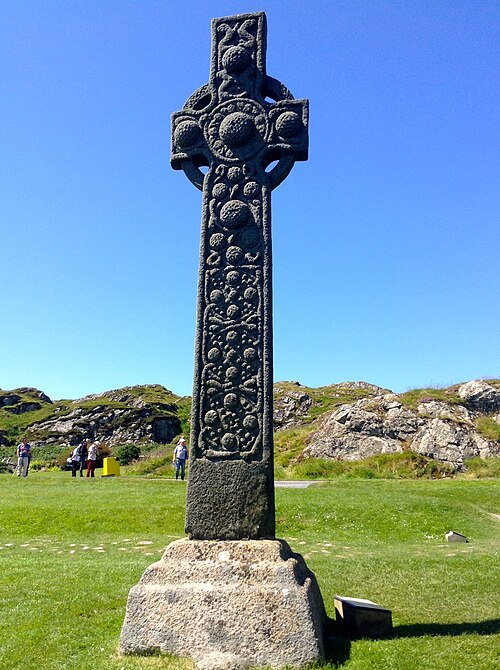
9th-century St Martin's Cross on Iona

Saint Matthew, folio 28v in the Book of Kells

Footprint (replica) used in king-making ceremonies, Dunadd
Picts
Videos
The Picts were a group of peoples in what is now Scotland north of the Firth of Forth, in the Early Middle Ages. Where they lived and details of their culture can be gleaned from early medieval texts
Dál Riata
…during the reign of Domnall Brecc (died 642) ended Dál Riata's "golden age", and the kingdom became a client of Northumbria for a time. In the 730s the Pictish king Óengus I led campaigns against Dál Riata and brought it under Pictish overlordship by 741. There is disagreement over the fate of the kingdom from…

The Aberlemno I roadside symbol stone, Class I Pictish stone with Pictish symbols, showing (top to bottom) the serpent, the double disc and Z-rod and the mirror and comb

Silver plaque from the Norrie's Law hoard, Fife, with double disc and Z-rod symbol

The so-called Daniel Stone, cross slab fragment found at Rosemarkie, Easter Ross

The Whitecleuch Chain, high-status Pictish silver chain, one of ten known to exist, dating from between 400 and 800 AD