Dāna
Videos
Dāna is a Sanskrit and Pali word that connotes the virtue of generosity, charity or giving of alms, in Indian religions and philosophies.


In Buddhist culture, dāna (donation) is any relinquishing of ownership to a recipient without expecting anything in return.

The Buddha and a monk are shown in a relief from Borobudur, Indonesia, making an alms round.

Three monks chanting in Lhasa, Tibet. 1993.
Buddhism
Videos
Buddhism, also known as Buddha Dharma and Dharmavinaya, is an Indian religion and philosophical tradition based on teachings attributed to the Buddha. It is the world's fourth-largest religion, with over 520 million followers, known as Buddhists, who comprise seven percent of the global population. Buddhism originated in the eastern Gangetic plain as a śramaṇa–movement in the 5th century BCE, and gradually spread throughout much of Asia via the Silk Road.

Mayadevi Temple marking the Buddha's birthplace in Lumbini

Enlightenment of Buddha, Kushan dynasty, late 2nd to early 3rd century CE, Gandhara
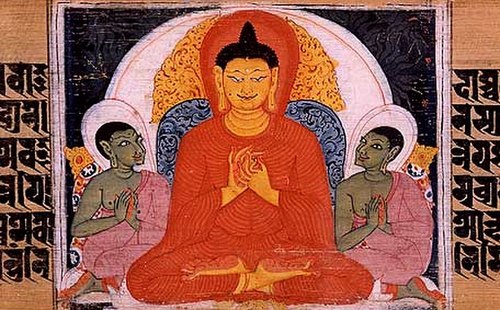
The Buddha teaching the Four Noble Truths. Sanskrit manuscript. Nalanda, Bihar, India

Traditional Tibetan Buddhist Thangka depicting the Wheel of Life with its six realms