Daguerreotype
Videos
Daguerreotype was the first publicly available photographic process, widely used from the 1830s to 1850s. "Daguerreotype" also refers to an image created through this process.

Lucrecia Guerrero Uribe 1848

Daguerreotype portrait of a daguerreotypist displaying daguerreotypes and cases pictured in an airtight frame, 1845

Daguerreotype of Louis Daguerre in 1844 by Jean-Baptiste Sabatier-Blot
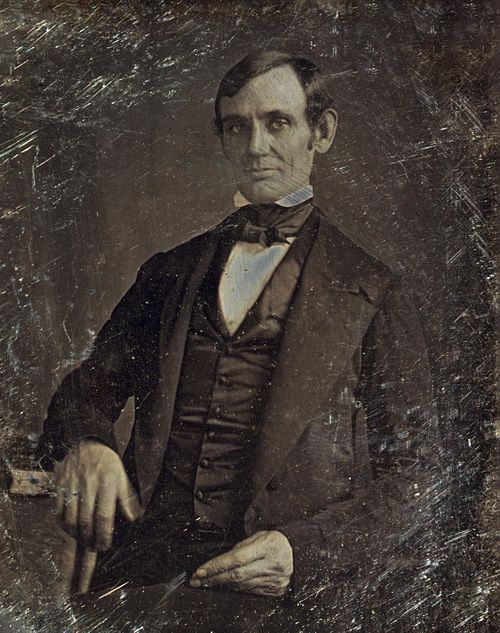
The earliest authenticated image of Abraham Lincoln, taken soon after his election to Congress in 1846, attributed to Nicholas H. Shepard
Louis Daguerre
Videos
Louis-Jacques-Mandé Daguerre was a French scientist, artist and photographer. He is recognized for his invention of the eponymous daguerreotype process of photography. He became known as one of the fa
Daguerreotype
…available photographic process, widely used from the 1830s to 1850s. "Daguerreotype" also refers to an image created through this process. Invented by Louis Daguerre and introduced worldwide in 1839, the daguerreotype was almost completely superseded by 1856 with new, less expensive processes, such as ambrotype…

An engraving of Daguerre during his career

View of the Boulevard du Temple, taken by Daguerre in 1838 in Paris, includes the earliest known verified photograph of a person. The image shows a busy street, but because the exposure had to continue for four to five minutes the moving traffic is not visible. At the lower right, however, a man apparently having his boots polished, and the bootblack polishing them, were motionless enough for their images to be captured.

Daguerreotype possibly made by Daguerre in 1837. The subject is believed to be Constant Huet, who worked at the Natural History Museum, where Daguerre took pictures in 1837. If correct, this would be the oldest surviving portrait photograph of a human being.