Daigo Fukuryū Maru
Videos
Daigo Fukuryū Maru was a Japanese tuna fishing boat with a crew of 23 men which was contaminated by nuclear fallout from the United States Castle Bravo thermonuclear weapon test at Bikini Atoll on Mar
Daigo Fukuryū Maru on display in Tokyo


Daigo Fukuryū Maru in the early 1950s, shortly before the incident

Medical professionals, before the era of whole body counting, assessing the radioactivity of a bedridden crew member by using a geiger counter on 31 March 1954, focusing on the person's hair, which would have collected dusty fallout.

Inspection of tuna with a geiger counter before sale at a fishmonger's on 31 March 1954
Hibakusha
Videos
Hibakusha is a word of Japanese origin generally designating the people affected by the atomic bombings of Hiroshima and Nagasaki by the United States at the end of World War II.
Daigo Fukuryū Maru
…hospital on May 20, 1955, after 14 months. They received yearly checkups to monitor the toll of long-term radiation sickness complications. Like the hibakusha, survivors of atomic bombings in Hiroshima and Nagasaki in 1945, the Daigo Fukuryū Maru crew were stigmatized because of the Japanese public's fear of…

A hibakusha of Hiroshima with symptomatic nuclear burns; the pattern on her skin is from the kimono she was wearing at the moment of the flash.

Panoramic view of the monument marking the hypocenter, or ground zero, of the atomic bomb explosion over Nagasaki
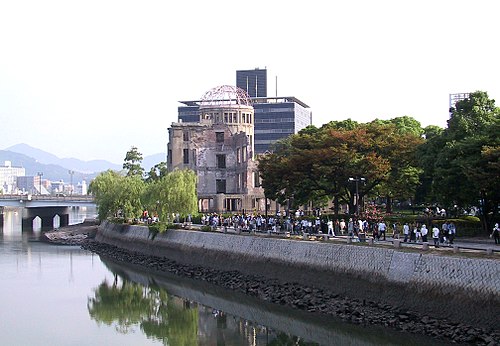
Citizens of Hiroshima walk by the Hiroshima Peace Memorial, the closest building to Ground Zero not to have collapsed from "Little Boy".
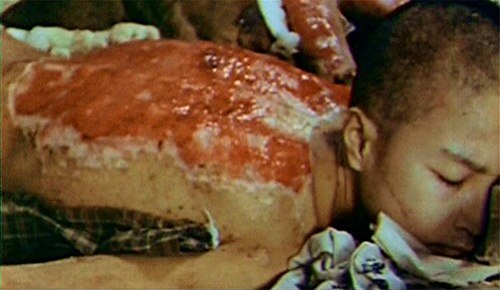
A photograph of Sumiteru Taniguchi's back injuries taken in January 1946 by a U.S. Marine photographer