Daikokuten
Videos
Daikokuten is a syncretic Japanese deity of fortune, luck and wealth. Daikokuten originated from Mahākāla, the Buddhist Deva conflated with the native Shinto god Ōkuninushi. He is a patron of farmers,
Descriptive catalogue of the collection of Buddhist art in the United States National museum


11th–12th century stone stele of Mahākāla from Bihar (Metropolitan Museum of Art)

Mahākāla (center) flanked by the bodhisattvas Samantabhadra (left) and Mañjuśrī (right). Baocheng Temple, Hangzhou, Zhejiang, China

Ming dynasty statue of Dàhēitiān. Sichuan, China. 14th century (with pedestal from the 16th century)
Shiva
Videos
Shiva, also known as Mahadeva and Hara, is one of the principal deities of Hinduism. He is the Supreme Being in Shaivism, one of the major traditions within Hinduism.
Daikokuten
…such as bankers. The Sanskrit term 'Mahākāla' ("Great Black [One]", "Great Time" or "Great Death") was originally one of the epithets of the Hindu god Shiva in his aspect as time (kāla), the ultimate destroyer of all things. This title and aspect of Shiva was eventually adopted by Buddhism, where Mahākāla…

Statue of Shiva at Shivoham Shiva Temple, Bangalore, Karnataka

A depiction of Somaskanda with a dancing Skanda in the middle of Parvati and Shiva.

An ancient sculpture of Shiva at the Elephanta Caves, Maharashtra. 6th century CE
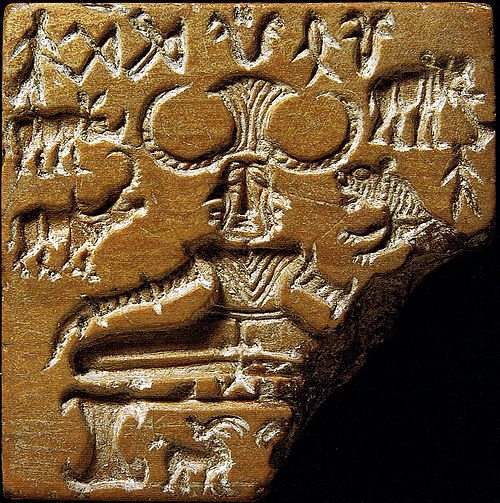
The Pashupati seal discovered during excavation of the Indus Valley archaeological site of Mohenjo-Daro and showing a possible representation of a "yogi" or "proto-Shiva" figure as Paśupati (Lord of the Animals" c. 2350–2000 BCE