Day-year principle
Videos
The day-year principle or year-for-a-day principle is a method of interpretation of Bible prophecy in which the word day in prophecy is considered to be symbolic of a year of actual time. It was the m
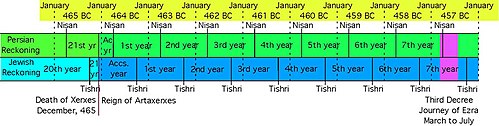
Beginning of the 70 Weeks: King's reigns were counted from New Year to New Year following an 'Accession Year'. The Persian New Year began in Nisan (March–April). The Jewish civil New Year began in Tishri (September–October)

Ending of the 70 Weeks: Tiberius Caesar began ruling in the Fall of 13 AD. So, his 15th year began in the Fall of 27, the year of the baptism of Jesus. This is 69 weeks (i.e. 483 years) after 457 BC.
Seventh-day Adventist Church
Videos
The Seventh-day Adventist Church is an Adventist Christian denomination which is distinguished by its observance of Saturday, the seventh day of the week in the Christian and the Hebrew calendar, as t
Day-year principle
…the method used by most of the Reformers, and is used principally by the historicist school of prophetic interpretation. It is actively taught by the Seventh-day Adventist Church, Jehovah's Witnesses, and the Christadelphians, though the understanding is not unique to these Christian denominations; since for example, it is implied…

Ascension Rock where some Millerites waited for the Second Coming of Jesus

Baptism of young man in Mozambique

Corn flakes package from 1906

Sanitarium products for sale