During the Holocaust, death marches were massive forced transfers of prisoners from one Nazi camp to other locations, which involved walking long distances resulting in numerous deaths of weakened peo

Dachau concentration camp inmates on a death march, photographed on 28 April 1945 by Benno Gantner from his balcony in Percha. The prisoners were heading in the direction of Wolfratshausen.

Victims of a death march (via train) from Buchenwald to Dachau, 29 April 1945

German civilians, under direction of U.S. medical officers, walk past a group of 30 Jewish women starved to death (Volary, Czechoslovakia) 1945

Memorial in Wodzisław Śląski of the death march from Auschwitz Birkenau
Death march
Videos
A death march is a forced march of prisoners of war, other captives, or deportees in which individuals are left to die along the way. It is distinct from simple prisoner transport via foot march. Arti
Death marches during the Holocaust
…transfers of prisoners from one Nazi camp to other locations, which involved walking long distances resulting in numerous deaths of weakened people. Most death marches took place toward the end of World War II, mostly after the summer/autumn of 1944. Hundreds of thousands of prisoners, mostly Jews, from Nazi camps…
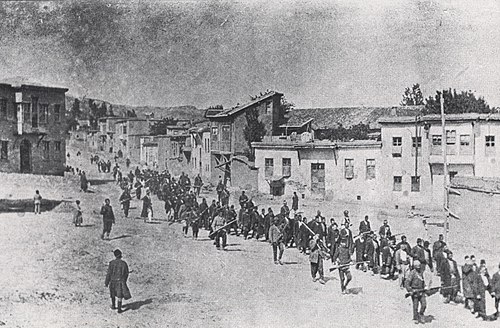
During the Armenian genocide, Armenians being led away by armed guards from Harpoot, where the educated and the influential of the city were selected to be massacred at the nearest suitable site, May 1915.

Arab-Swahili slave traders and their captives on the Ruvuma River

American and Filipino POWs during the Bataan Death March.

A group of Croatians during the Bleiburg repatriations.