Depiction of Jesus
Videos
The depiction of Jesus in pictorial form dates back to early Christian art and architecture, as aniconism in Christianity was rejected within the ante-Nicene period. It took several centuries to reach
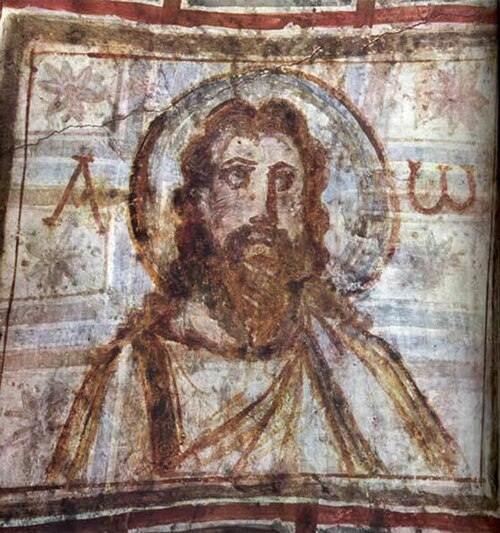
A mural painting from the catacomb of Commodilla. One of the first bearded images of Jesus, late 4th century.

Incised sarcophagus slab with the Adoration of the Magi from the Catacombs of Rome, 3rd century. Plaster cast with added colour.

Dura Europos fresco which was dubbed The Healing of the Paralytic – one of the oldest possible depictions of Jesus, although there are different interpretations of the scene. from the Syrian city of Dura Europos, dating from about 235 AD

Bearded Jesus between Peter and Paul, Catacombs of Marcellinus and Peter, Rome. Second half of the 4th century. Such works "first present us with the fully formed image of Christ in Majesty that will so dominate Byzantine art." For detail of Christ, see this file.
Christ Pantocrator
Videos
In Christian iconography, Christ Pantocrator is a specific depiction of Jesus. Pantocrator or Pantokrator is derived from one of many names of God in Judaism.
Depiction of Jesus
…political events and developments in iconography, seeing the change as a purely theological one, resulting from the shift of the concept and title of Pantocrator ("Ruler of all") from God the Father (still not portrayed in art) to Christ, which was a development of the same period, perhaps led by Athanasius of…

Jesus Christ Pantocrator (Detail from the deesis mosaic in Hagia Sophia, Istanbul)

Christ Pantocrator in the dome of the Church of the Holy Sepulchre's catholicon. Church domes are a common site of Pantocrator images.

Christ Pantocrator mosaic in Byzantine style from the Cefalù Cathedral, Sicily

The oldest known icon of Christ Pantocrator, encaustic on panel (Saint Catherine's Monastery). The two different facial expressions on either side of Christ's face depict Christ as the bearer of mercy and grace (left half) and Christ as the dreaded judge of unrepentant sinners (right side).