Despard Plot
Videos
Photos
The Despard Plot was a failed 1802 conspiracy by British revolutionaries led by Colonel Edward Marcus Despard, a former army officer and colonial official. Evidence presented in court suggested that Despard planned to assassinate the monarch George III and seize key strong points in London such as the Bank of England and Tower of London as a prelude to a wider uprising by the population of the city. The British Government was aware of the plot five months before the scheduled date of attack, but waited to arrest to gain enough evidence. One week before the scheduled attack, Despard and his co-conspirators were arrested at the Oakley Arms pub in Lambeth on suspicion of plotting an uprising. Despard's execution on 21 February 1803 was attended by a crowd of around 20,000, the largest public gathering until the funeral of Lord Nelson two years later following the Battle of Trafalgar.

Etching by Barlow (based on sketch taken at trial)
Bow Street Runners
Videos
Photos
The Bow Street Runners were the law enforcement officers of the Bow Street Magistrates' Court in the City of Westminster. They have been called London's first professional police force. The force originally numbered six men and was founded in 1749 by magistrate Henry Fielding, who was also well known as an author. His assistant, brother, and successor as magistrate, John Fielding, moulded the constables into a professional and effective force. Bow Street Runners was the public's nickname for the officers although the officers did not use the term themselves and considered it derogatory. The group was disbanded in 1839 and its personnel merged with the Metropolitan Police, which had been formed ten years earlier.
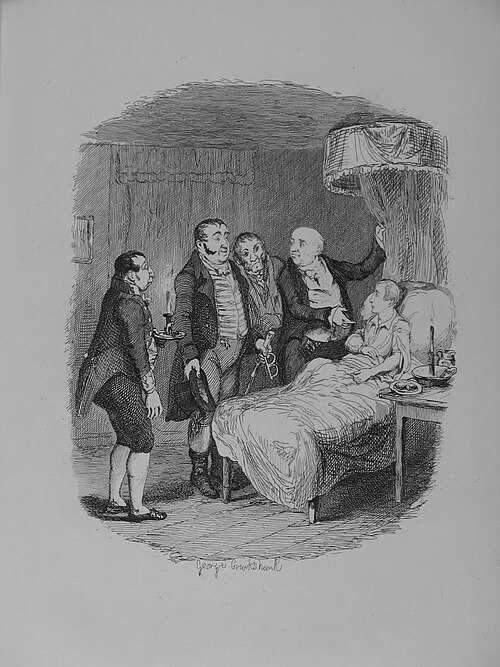
"Oliver waited on by Bow Street Runners", an engraving in The Writings of Charles Dickens, volume 4, Oliver Twist
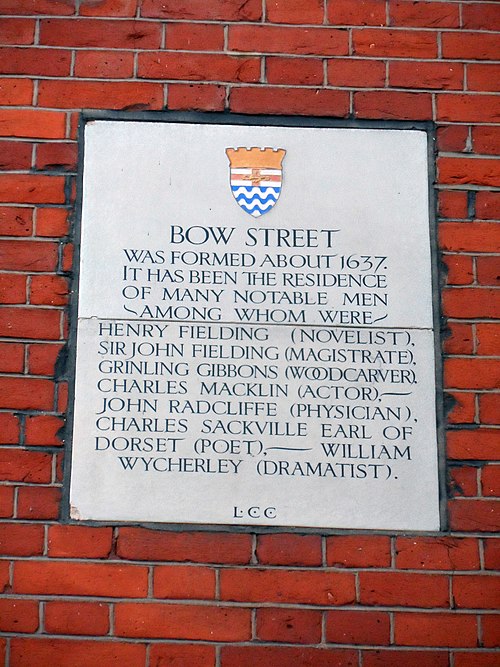
Bow Street Plaque

Sir John Fielding

Bow Street office in the late 19th century