The Republic of China Air Force (ROCAF) was officially formed by the Kuomintang (KMT) after the establishment of the Aviation Ministry in 1920. As tensions mounted between China and Imperial Japan in the 1930s, air units from the Chinese warlords, including those from the Guangdong Provincial Air Force, and overseas Chinese aviators, became integrated into the centralized command of the ROCAF, nominally as the Nationalist Air Force of China, and coordinating with the Second United Front to counter the Imperial Japanese invasion and occupation.

A Soviet-made Polikarpov I-16 with Chinese insignia. The I-16 was the main fighter plane used by the Chinese Air Force and Soviet volunteers following the Sino-Soviet Treaty of 1937

Xu Jixiang of the 17th PS, 5th PG, fought against all odds in the debut dogfight against the A6M Zero-fighter, shown here with an I-15bis,

American P-40E Warhawk decorated with the famous sharkmouth nose art that had identified the AVG
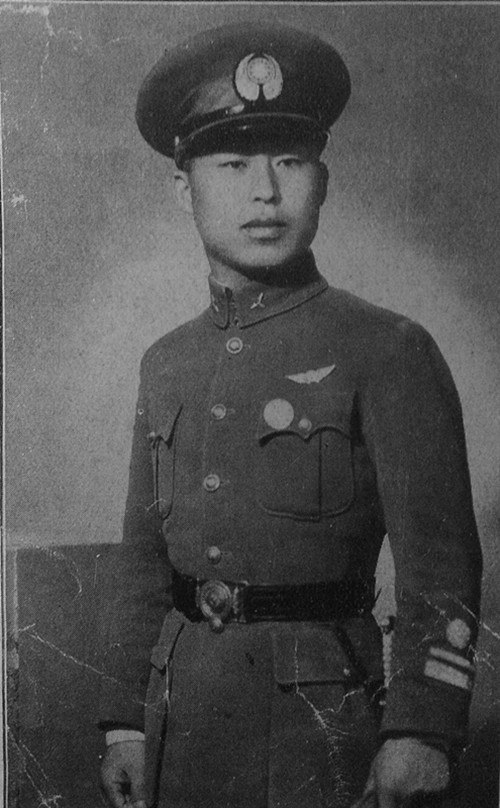
Colonel Kao Chih-hang, commander of the 4th Pursuit Group, had served in the air force of the Manchurian warlord Zhang Zuolin
Boeing P-26 Peashooter
Videos
The Boeing P-26 "Peashooter" was the first American production all-metal fighter aircraft and the first pursuit monoplane to enter squadron service with the United States Army Air Corps. Designed and built by Boeing, the prototype first flew in 1932, and the type was still in use with the U.S. Army Air Corps as late as 1941 in the Philippines. There are two surviving Peashooters and three reproductions on display, with two more under construction.


Formation of nine Boeing P-26s of the 20th Pursuit Group

Boeing P-26A Peashooter of the 34th Pursuit Squadron 17th Pursuit Group

Lineup of Chinese Boeing 281s