Dii Consentes
Videos
The Dii Consentes, also known as Di or Dei Consentes, or The Harmonious Gods, is an ancient list of twelve major deities, six gods and six goddesses, in the pantheon of Ancient Rome. Their gilt statue

Although the ritual purpose of this 1st century BCE altar from Gabii is unclear, the twelve deities depicted correspond to the Dii Consentes
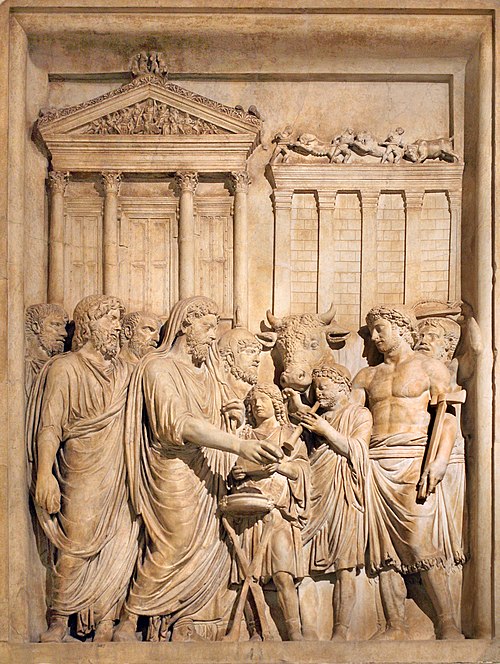
Bas relief from Arch of Marcus Aurelius showing sacrifice
Ceres (mythology)
Videos
In ancient Roman religion, Ceres was a goddess of agriculture, grain crops, fertility, and motherly relationships. She was originally the central deity in Rome's so-called plebeian or Aventine Triad,
Dii Consentes
…The gods were listed by the poet Ennius in the late 3rd century BCE in a paraphrase of an unknown Greek poet: Juno, Vesta, Minerva, Ceres, Diana, Venus Mars, Mercurius, Iovis, Neptunus, Vulcanus, Apollo Livy arranges them in six male-female pairs: Jupiter-Juno, Neptune-Minerva, Mars-Venus…

Seated Ceres from Emerita Augusta, present-day Mérida, Spain (National Museum of Roman Art, 1st century AD)

Funerary statue of an unknown woman, depicted as Ceres holding wheat. Mid 3rd century AD. (Louvre)

During her long, torch-lit search for her daughter, Proserpina, Ceres drinks water given her by Hecuba, and is mocked by the boy, Askalabos, for spilling some of it. She will transform him into a lowly "star-lizard' or newt (Latin; stellio) as punishment. The episode is in Ovid's, Metamorphoses V, lines 449-450. Oil-paint on copper, by Adam Elsheimer and workshop, copy circa 1605, held by the Museo Nacional del Prado. From an original in the collection of Alfred and Isabel Bader

Ceres holding a bundle of cereal grains, a late 18th century work by Dominik Auliczek of the Nymphenburg Porcelain Manufactory