Din-i Ilahi
Videos
Dīn-i Ilāhī, contemporarily called Tawḥīd-i-Ilāhī, was a short-lived syncretic theology that was propounded by emperor Akbar of the Mughal Empire in 1582. According to Indian professor Iqtidar Alam Kh
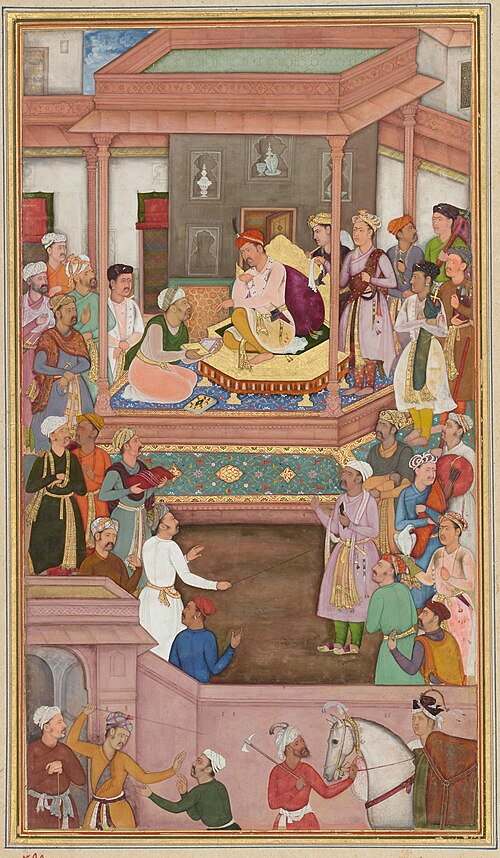
Abu'l-Fazl, one of the disciples of Din-i Ilahi, presenting Akbarnama to Akbar, Mughal miniature
Akbar
Videos
Akbar, also known as Akbar the Great, was the third Mughal emperor, who reigned from 1556 to 1605. Akbar succeeded his father, Humayun, under a regent, Bairam Khan, who helped the young emperor expand
Din-i Ilahi
…contemporarily called Tawḥīd-i-Ilāhī (توحید الهی, lit. 'Oneness of the Divine'), was a short-lived syncretic theology that was propounded by emperor Akbar of the Mughal Empire in 1582. According to Indian professor Iqtidar Alam Khan of Aligarh Muslim University, it was based on the concept of what was…

Akbar with a lion and a calf, by Govardhan, c. 1630

Official seal of Mughal emperor Akbar, from Or 14982 1, dating to 978 A.H.

Contemporary portrait of Akbar as a boy, offering a painting to his father Humayun while in Kabul. Painted in 1550–56

Afghan troops of the Sur Empire surrendering to the Mughal forces of Akbar at the Siege of Mankot (1557). Akbarnama (1590–95)