Dione (Titaness)
Videos
In ancient Greek religion and mythology, Dione is an oracular goddess and Titaness. She is primarily known from Book V of Homer's Iliad, where she tends to the wounds suffered by her daughter Aphrodit
Dione in the north frieze of the Pergamon Altar, Pergamon Museum in Berlin


Three goddesses from the Parthenon's east pediment, possibly Hestia, Dione and Aphrodite; c. 435 BC, British Museum.

The sanctuary of Dodona from the theater.
Titans
Videos
In Greek mythology, the Titans were the deities who preceded the Olympians. According to the Theogony of Hesiod, they were the twelve children of the primordial deities Uranus and Gaia. The six male T
Dione (Titaness)
…In ancient Greek religion and mythology, Dione (; Ancient Greek: Διώνη, romanized: Diṓnē, lit. 'she-Zeus') is an oracular goddess and Titaness. She is primarily known from Book V of Homer's Iliad, where she tends to the wounds suffered by her daughter Aphrodite. In myth, Dione is either presented…
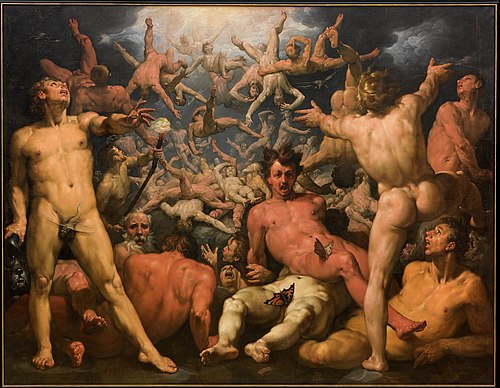
The Fall of the Titans (1596–98), a mythological painting by Dutch painter Cornelis van Haarlem.
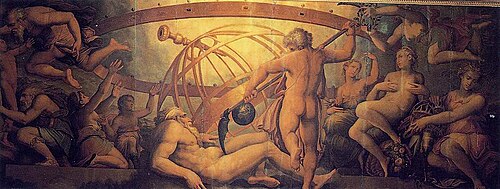
The Mutilation of Uranus by Saturn: fresco by Giorgio Vasari and Cristofano Gherardi, c. 1560 (Sala di Cosimo I, Palazzo Vecchio)

Rhea presenting Cronus the stone wrapped in cloth

"Fall of the Titans". Oil on canvas by Jacob Jordaens, 1638.