Divine judgment
Videos
Divine judgment means the judgment of God or other supreme beings and deities within a religion or a spiritual belief.
Detail from Michelangelo's The Last Judgment, Sistine Chapel

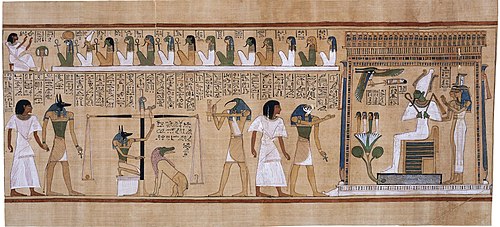
Anubis conducts Hunefer to judgment, where his heart will be weighed against the feather of truth; the fourteen gods above sit in order of judgment, with the underworld ruler Osiris, flanked by Isis and Nephthys, to the right, and the monstrous Ammit waiting next to the scales to devour the souls of those whose hearts are heavier than the feather

Hermes as Guide of Souls prepares to lead a woman to the afterlife (5th century BC lekythos)

St. Michael weighing souls, Abtenau
Divine retribution
Videos
Divine retribution or divine punishment is the supernatural punishment of a single person, a group of people, or everyone, by a deity in response to the invocation of their anger. Myths and folklore d
Divine judgment
…drawn with the sword, as was said three thousand years ago, so still it must be said "the judgments of the Lord are true and righteous altogether. Divine retribution General judgment Particular judgment Last Judgment…

The End of the World, commonly known as The Great Day of His Wrath, an 1851–1853 oil painting on canvas by the English painter John Martin. According to Frances Carey, the painting shows the "destruction of Babylon and the material world by natural cataclysm". This painting, Carey holds, is a response to the emerging industrial scene of London as a metropolis in the early nineteenth century, and the original growth of the Babylon civilisation and its final destruction. According to the
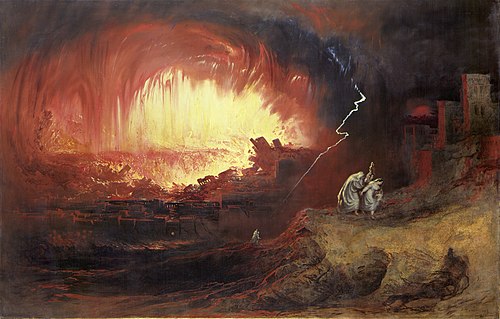
The Destruction of Sodom And Gomorrah by John Martin, 1852

Stained glass, Holy Family Church, Teconnaught, September 2010 crop