The Dodd–Frank Wall Street Reform and Consumer Protection Act, commonly referred to as Dodd–Frank, is a United States federal law that was enacted on July 21, 2010. The law overhauled financial regulation in the aftermath of the Great Recession, and it made changes affecting all federal financial regulatory agencies and almost every part of the nation's financial services industry.

Share in GDP of U.S. financial sector since 1860
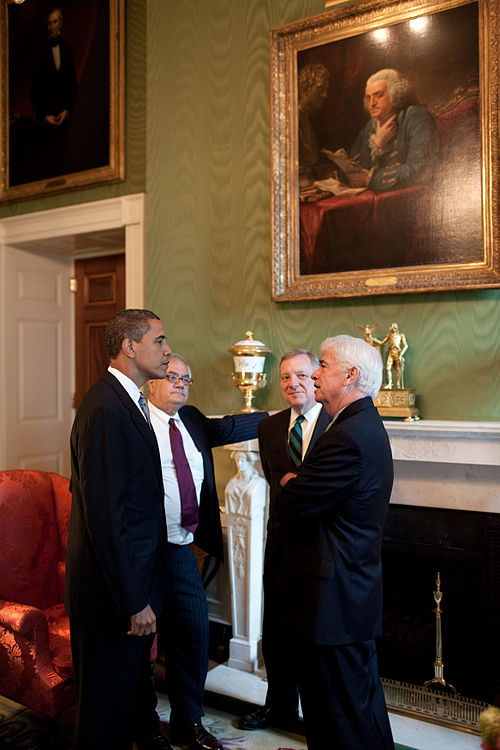
President Barack Obama meeting with Rep. Barney Frank, Sen. Dick Durbin, and Sen. Chris Dodd, at the White House prior to a financial regulatory reform announcement on June 17, 2009

Ben Bernanke (lower-right), Chairman of the Federal Reserve Board of Governors, at a House Financial Services Committee hearing on February 10, 2009
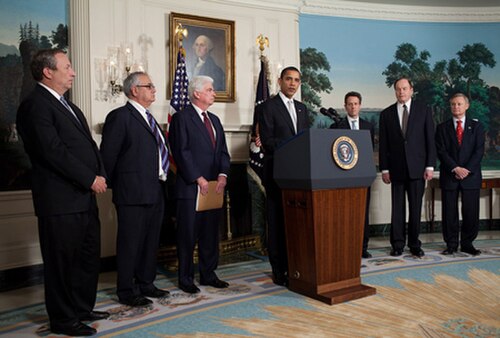
President Barack Obama addresses reporters about the economy and the need for financial reform in the Diplomatic Reception Room of the White House on February 25, 2009.
Federal Reserve
Videos
The Federal Reserve System is the central banking system of the United States. It was created on December 23, 1913, with the enactment of the Federal Reserve Act, after a series of financial panics led to the desire for central control of the monetary system in order to alleviate financial crises. Over the years, events such as the Great Depression in the 1930s and the Great Recession during the 2000s have led to the expansion of the roles and responsibilities of the Federal Reserve System.

The Eccles Building in Washington, D.C., which serves as the Federal Reserve System's headquarters

Obverse of a Federal Reserve $1 note issued in 2009

Board of governors in April 2019, when two of the seven seats were vacant