Dona Zica
Videos
Euzébia Silva de Oliveira, better known as Dona Zica, was a Brazilian samba dancer at the Mangueira Samba school in Rio de Janeiro, who went on to play an important role in the Mangueira favela.

Favela
Videos
Favela is an umbrella name for several types of impoverished neighborhoods in Brazil. The term, which means slum or ghetto, was first used in the Slum of Providência in the center of Rio de Janeiro in

Rocinha is the largest hill favela in Rio de Janeiro (as well as in Brazil and the second largest slum and shanty town in Latin America). Although favelas are found in urban areas throughout Brazil, many of the more famous ones exist in Rio.

Rio's Santa Teresa neighborhood features favelas (right) contrasted with more affluent houses (left). The statue Christ the Redeemer, shrouded in clouds, is in the left background.

The lights of Vidigal favela in Rio de Janeiro as seen from Ipanema and Leblon beaches. The cone spire to the far right is part of the Morro Dois Irmãos.
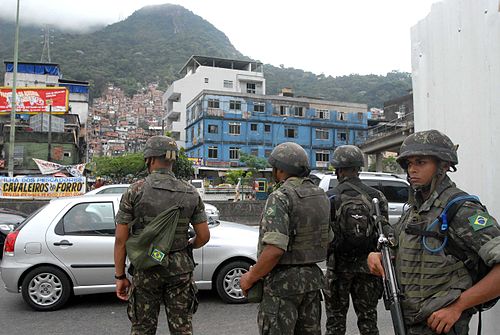
Brazilian troops during an operation in Rocinha