Douglas C-47 Skytrain
Videos
The Douglas C-47 Skytrain, or Dakota, is a military transport aircraft that was developed from the civilian Douglas DC-3 airliner. It was used extensively by the Allies during World War II. During the

C-47 43-30652 "Whiskey 7" at 2014 Duxford D-Day Show

U.S. Navy C-117Ds at RAF Mildenhall in 1967

U.S. Army Pathfinders and USAAF flight crew prior to D-Day, June 1944, in front of a C-47 Skytrain at RAF North Witham
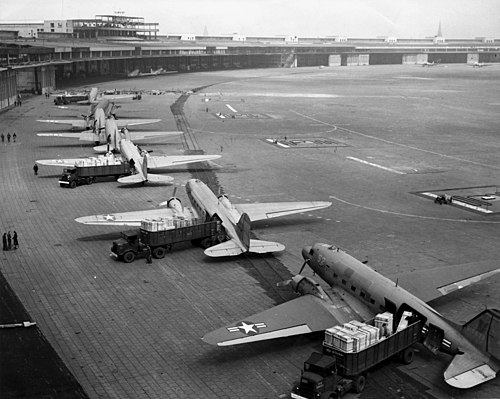
C-47s unloading at Tempelhof Airport during the Berlin Airlift, 1948
Douglas AC-47 Spooky
Videos
The Douglas AC-47 Spooky was the first in a series of fixed-wing gunships developed by the United States Air Force during the Vietnam War. It was designed to provide more firepower than light and medi
Douglas C-47 Skytrain
…missions. EC-47s were also operated by the Vietnamese, Laotian, and Cambodian Air Forces. A gunship variation, using three 7.62 mm miniguns, designated AC-47 "Spooky", often nicknamed "Puff the magic dragon", also was deployed. In June 1975, the USAF retired the last C-47 in service. In the US Navy and Marine Corps…

A restored AC-47 in flight

AC-47

AC-47 at Nha Trang Air Base in South Vietnam

Timelapse photo showing tracer rounds visible at night while converging on the target of an AC-47D performing a pylon turn in Saigon in 1968