Dreamcatcher
Videos
In some Native American and First Nations cultures, a dreamcatcher is a handmade willow hoop, on which is woven a net or web. It may also be decorated with sacred items such as certain feathers or bea
Dreamcatcher, Royal Ontario Museum


An ornate, contemporary, nontraditional dreamcatcher

"Spider web" charm, hung on infant's cradle (shown alongside a "Mask used in game" and "Ghost leg, to frighten children"), Bureau of American Ethnology Bulletin (1929)

Contemporary derivation sold at a craft fair in El Quisco, Chile, in 2006
Apotropaic magic
Videos
Apotropaic magic or protective magic is a type of magic intended to turn away harm or evil influences, as in deflecting misfortune or averting the evil eye. Apotropaic observances may also be practice
Dreamcatcher
…So the mothers and grandmothers weave webs for the children, using willow hoops and sinew, or cordage made from plants. The purpose of these charms is apotropaic and not explicitly connected with dreams: Even infants were provided with protective charms. Examples of these are the "spiderwebs" hung on the hoop…
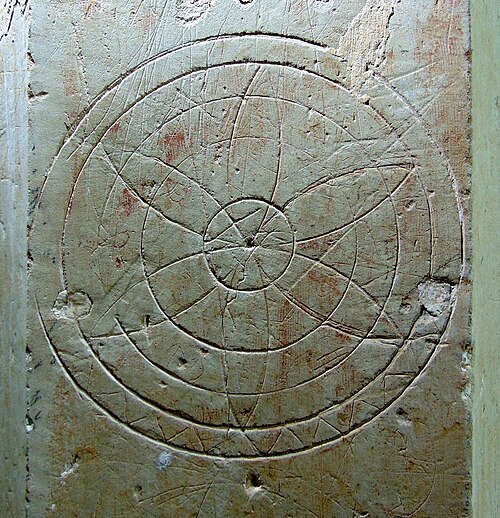
Medieval apotropaic marking on the inside of a church in Suffolk, England

The Gorgon, flanked by lionesses and showing her belt clasp of serpents; the pediment of the 580 BCE temple of Artemis in Corfu. Archaeological Museum of Corfu.
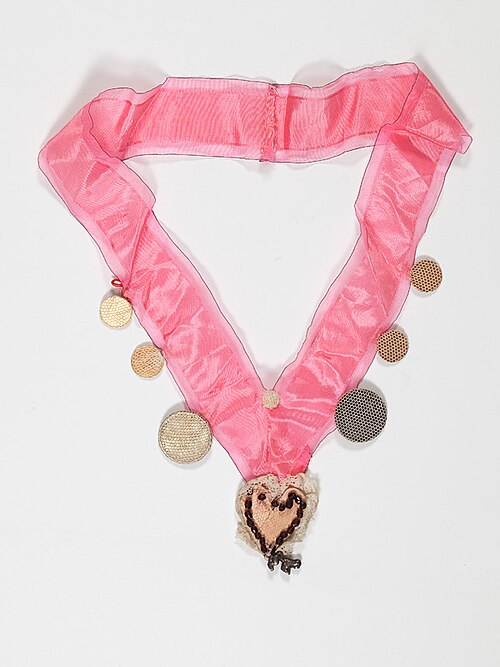
Jewish apotropaic neckband sewn with coins to deflect the evil eye. 1944, Basel, in the Jewish Museum of Switzerland's collection.

An ancient Egyptian apotropaic wand shows a procession of protective deities. It was used in birth rituals, perhaps to draw a magic circle around the mother and child.