Dzungar Khanate
Videos
The Dzungar Khanate, also known as the Zunghar Khanate or Junggar Khanate was the last nomadic empire of Oirat origin. At its greatest extent, it covered an area from southern Siberia in the north to
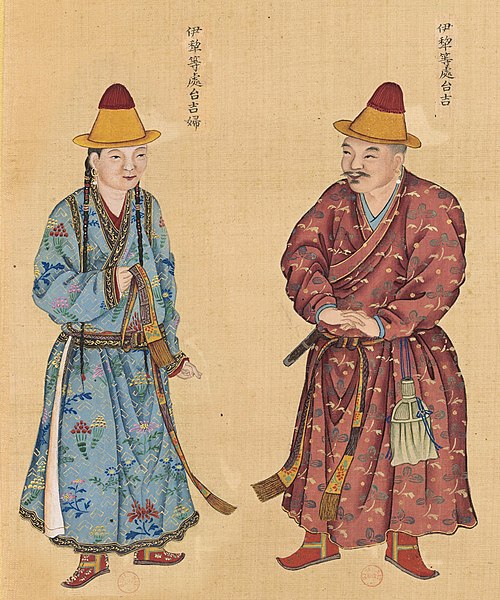
Mongol Prince (Taiji, Chinese: 台吉) from Ili and other regions, and his wife. Huang Qing Zhigong Tu, 1769.

Mongol tribal leader (Zaisang, 宰桑) from Ili and other regions, with his wife. Huang Qing Zhigong Tu, 1769.

Commoner from Ili region, with his wife. Huang Qing Zhigong Tu, 1769.

Qing Dzungar wars from 1688 to 1757
Dzungar–Qing Wars
Videos
The Dzungar–Qing Wars, also known as the Sino-Dzungar Wars, were a decades-long series of conflicts that pitted the Dzungar Khanate against the Qing dynasty and its Mongol vassals. Fighting took place
Dzungar Khanate
…his brother Jebtsundamba Khutuktu Zanabazar fled across the Gobi Desert to the Qing dynasty and submitted to the Kangxi Emperor. Leading to The First Dzungar-Qing War. Late in the summer of 1690, Galdan crossed the Kherlen River with a force of 20,000 and engaged a Qing army at Battle of Ulan Butung 350 kilometers…

The Dzungar army surrenders to the Qing dynasty after Dawachi is captured in 1756.

Military camp of the Chinese Emperor at Kherlen River during the campaign of 1696

7th Dalai Lama pretender, Lha-bzang Khan

Zhaohui receives the surrender of Dawachi at Ili, 1755. Painting by Jesuit painter at the Qing court, Ignatius Sichelbart.