Early Netherlandish painting
Videos
Early Netherlandish painting is the body of work by artists active in the Burgundian and Habsburg Netherlands during the 15th- and 16th-century Northern Renaissance period, once known as the Flemish P
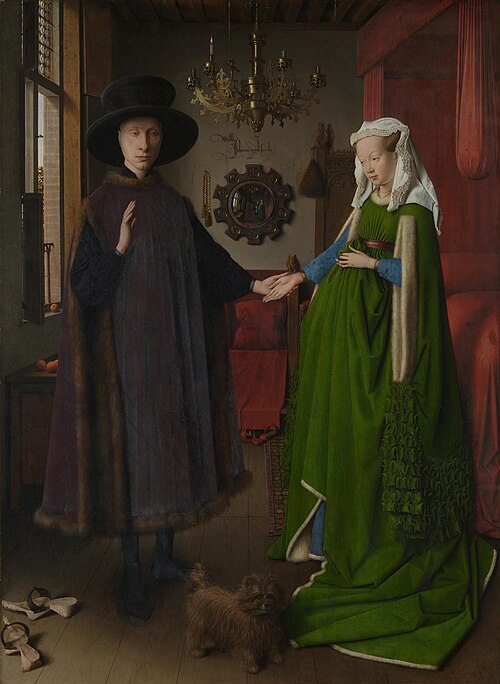
Jan van Eyck, The Arnolfini Portrait, 1434, National Gallery, London

Rogier van der Weyden, The Descent from the Cross, c. 1435, Museo del Prado, Madrid

The Ghent Altarpiece, completed in 1432 by Hubert and Jan van Eyck. This polyptych and the Turin-Milan Hours are generally seen as the first major works of the Early Netherlandish period.

Hieronymus Bosch, The Garden of Earthly Delights, c. 1490–1510. Museo del Prado, Madrid. Art historians are divided as to whether the central panel was intended as a moral warning or as a panorama of paradise lost.
Hieronymus Bosch
Videos
Hieronymus Bosch was a Dutch painter from Brabant. He is one of the most notable representatives of the Early Netherlandish painting school. His work, generally oil on oak wood, mainly contains fantas
Early Netherlandish painting
…The major Netherlandish painters include Campin, van Eyck, Rogier van der Weyden, Dieric Bouts, Petrus Christus, Hans Memling, Hugo van der Goes and Hieronymus Bosch. These artists made significant advances in natural representation and illusionism, and their work typically features complex iconography. Their subjects…

Portrait of Hieronymus Bosch from the Recueil d'Arras (mid-16th century)

The Owl's Nest, Pen and bistre on paper, 140 × 196 mm. Rotterdam, Museum Boijmans Van Beuningen.

The Crucifixion of St Wilgefortis is attributed to Bosch's middle period, c. 1497.