East German uprising of 1953
Videos
The East German uprising of 1953 was an uprising that occurred over the course of two days in the German Democratic Republic from 16 to 17 June 1953. It began with strike action by construction worker

From top to bottom, left to right: Soviet tanks suppress unarmed civilians on Schützenstrasse in Berlin · in front of the Dimitrov Museum in Leipzig · on Leipziger Strasse in Berlin · Deutsche Bundespost commemorative stamp · Burning building on Potsdamer Platz

Soviet IS-2 tank passing in front of the old Reichsgericht building in Leipzig on 17 June

Detlev-Rohwedder-Haus in Berlin, known as the House of Ministries in 1953.

1950, before the uprising
East Germany
Videos
East Germany, officially the German Democratic Republic, was a country in Central Europe from its formation on 7 October 1949 until its reunification with West Germany on 3 October 1990. Until 1989, i
East German uprising of 1953
…The East German uprising of 1953 (German: Volksaufstand vom 17. Juni 1953) was an uprising that occurred over the course of two days in the German Democratic Republic (GDR) from 16 to 17 June 1953. It began with strike action by construction workers in East Berlin on 16 June against work quotas during the Sovietization…

GDR leaders: President Wilhelm Pieck and Prime Minister Otto Grotewohl, 1949
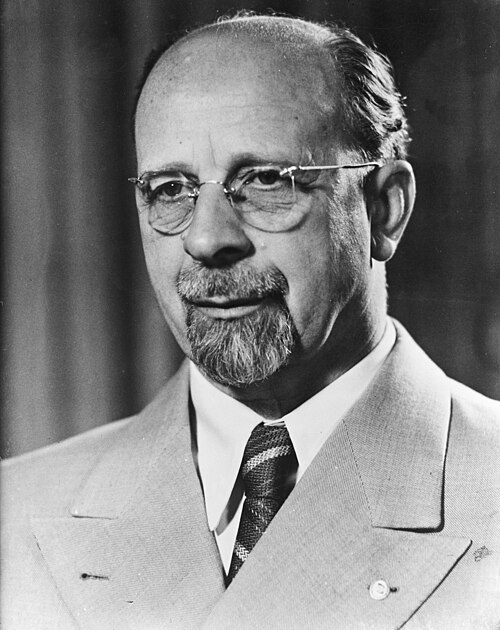
SED First Secretary, Walter Ulbricht, 1960
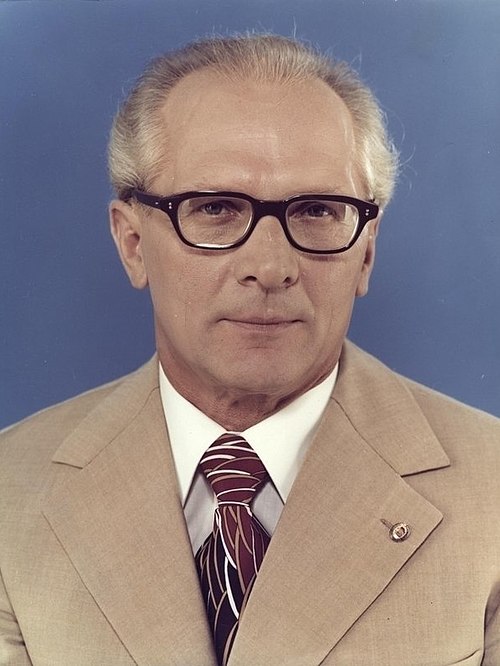
Erich Honecker, head of state (1971–1989)

Chancellor of the Federal Republic of Germany (West Germany) Helmut Schmidt, Chairman of the State Council of the German Democratic Republic (East Germany) Erich Honecker, U.S. president Gerald Ford and Austrian chancellor Bruno Kreisky signing the Helsinki Act