Ebla tablets
Videos
The Ebla tablets are a collection of as many as 1,800 complete clay tablets, 4,700 fragments, and many thousands of minor chips found in the palace archives of the ancient city of Ebla, Syria. The tab

A tablet from the archive

Parts of the excavations (Damascus gate)
Clay tablet
Videos
In the Ancient Near East, clay tablets were used as a writing medium, especially for writing in cuneiform, throughout the Bronze Age and well into the Iron Age.
List of the victories of Rimush, king of Akkad, upon Abalgamash, king of Marhashi, and upon Emahsini, King of Elam, c. 2270 BCE.

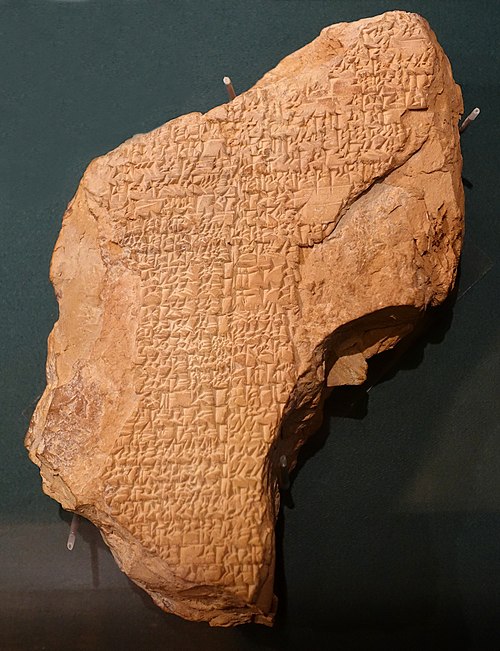
Sumerian clay tablet, currently housed in the Oriental Institute at the University of Chicago, inscribed with the text of the poem Inanna and Ebih by the priestess Enheduanna, the first author whose name is known

The Babylonian Plimpton 322 clay tablet, with numbers written in cuneiform script. Believed to have been written c. 1800 BCE, this table lists two of the three numbers in what are now called Pythagorean triples.