Edict of Fontainebleau
Videos
The Edict of Fontainebleau was an edict issued by French King Louis XIV and is also known as the Revocation of the Edict of Nantes. The Edict of Nantes (1598) had granted Huguenots the right to practice their religion without state persecution. Protestants had lost their independence in places of refuge under Cardinal Richelieu on account of their supposed insubordination, but they continued to live in comparative security and political contentment. From the outset, religious toleration in France had been a royal, rather than popular, policy.


The Edict of Fontainebleau in the Archives Nationales

Plaque commemorating Edict of Nantes

The palace at Fontainebleau as it now stands
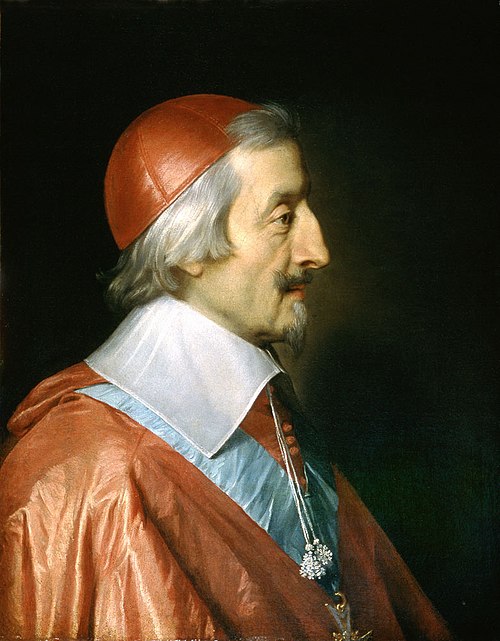
Cardinal Richelieu
Videos
Armand Jean du Plessis, 1st Duke of Richelieu, known as Cardinal Richelieu, was a French statesman and prelate of the Catholic Church. He became known as l'Éminence Rouge, or "the Red Eminence", a term derived from the title "Eminence" applied to cardinals and from the red robes that they customarily wear.

The young Louis XIII; only a figurehead during his early reign; power actually rested with his mother Marie de' Medici.

Jean Warin, Cardinal de Richelieu 1622 (obverse), 1631

On the "Day of the Dupes" in 1630, it appeared that Marie de Médicis had secured Richelieu's dismissal. Richelieu, however, survived the scheme, and Marie was exiled as a result.