Emission nebula
Videos
An emission nebula is a nebula formed of ionized gases that emit light of various wavelengths. The most common source of ionization is high-energy ultraviolet photons emitted from a nearby hot star. A
Planetary nebulae, represented here by the Ring Nebula, are examples of emission nebulae.


Emission nebula LHA 120-N 55 in the Large Magellanic Cloud.

Hubble image of emission nebula NGC 2174.

Hubble image of emission nebula NGC 2313.
Nebula
Videos
A nebula is a distinct luminescent part of interstellar medium, which can consist of ionized, neutral, or molecular hydrogen and also cosmic dust. Nebulae are often star-forming regions, such as the P
Emission nebula
…An emission nebula is a nebula formed of ionized gases that emit light of various wavelengths. The most common source of ionization is high-energy ultraviolet photons emitted from a…

True color image of the Trifid Nebula, showing complex gas and plasma structure
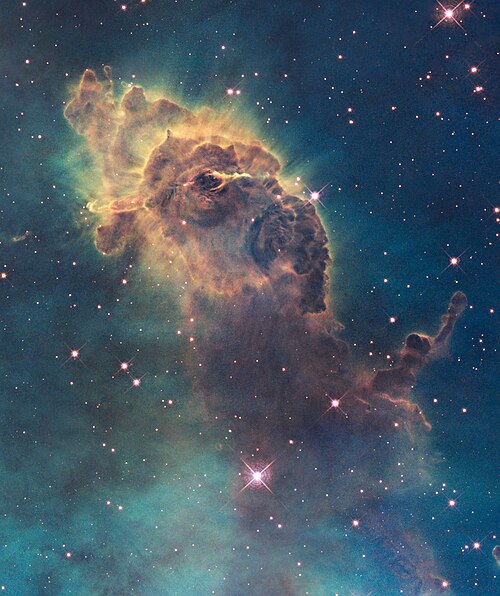
Portion of the Carina Nebula
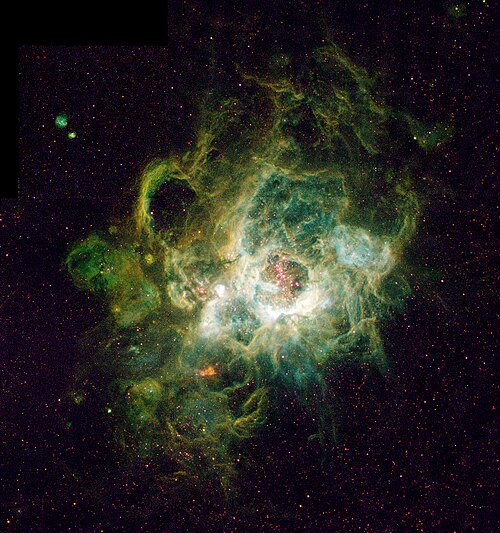
NGC 604, a nebula in the Triangulum Galaxy
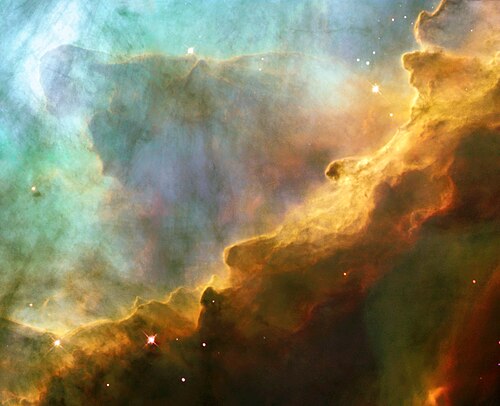
The Omega Nebula, an example of an emission nebula