Emory Leland Kemp was the founder and director of the Institute for the History of Technology and Industrial Archaeology at West Virginia University. There, he was Chair and Professor of Civil Engineering at the Benjamin M. Statler College of Engineering & Mineral Resources, and a professor of history in the Eberly College of Arts and Sciences. Until his death, he served as Professor Emeritus for the Department of History at West Virginia University.
Kemp in 2018
Industrial archaeology (IA) is the systematic study of material evidence associated with the industrial past. This evidence, collectively referred to as industrial heritage, includes buildings, machinery, artifacts, sites, infrastructure, documents and other items associated with the production, manufacture, extraction, transport or construction of a product or range of products. The field of industrial archaeology incorporates a range of disciplines including archaeology, architecture, construction, engineering, historic preservation, museology, technology, urban planning and other specialties, in order to piece together the history of past industrial activities. The scientific interpretation of material evidence is often necessary, as the written record of many industrial techniques is often incomplete or nonexistent. Industrial archaeology includes both the examination of standing structures and sites that must be studied by an excavation.

The Ironbridge Gorge, Shropshire, UK, was one of the first areas in the world to be part of a large-scale industrial archaeology study. In 1986, it was one of the first industrial sites to be named a UNESCO World Heritage Site.
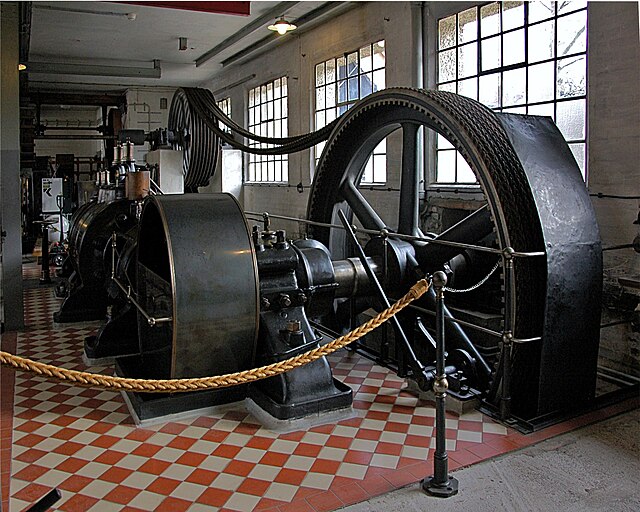
A preserved steam engine in Germany - one of the symbols of the industrial revolution, and a common topic of study for industrial archaeologists.
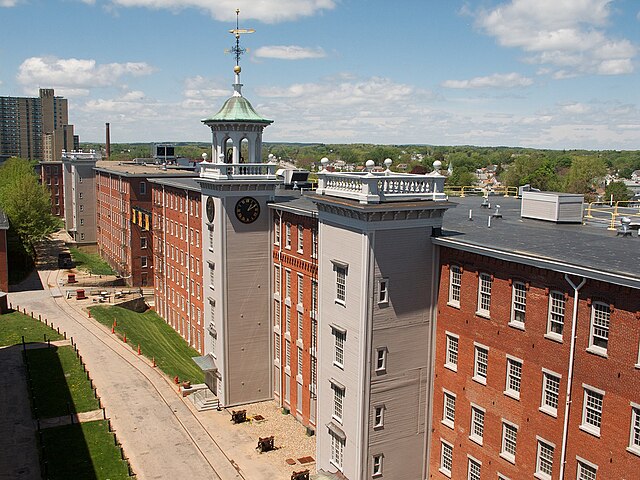
Boott Cotton Mills, Lowell, Massachusetts, restored as part of the Lowell National Historic Park, established the 1970s largely through the efforts of industrial archaeologists.
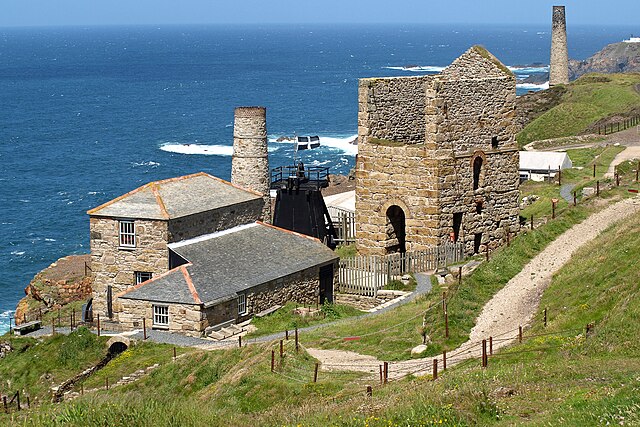
Levant Mine in Cornwall, an early subject of preservation in the 1930s.