England in the Middle Ages
Videos
England in the Middle Ages concerns the history of England during the medieval period, from the end of the 5th century through to the start of the early modern period in 1485. When England emerged fro

Clockwise, from top left: Detail of the 11th-century Bayeux Tapestry, showing Harold Godwinson; 15th-century stained glass from York Minster, showing a scene from the Apocalypse; Salisbury Cathedral, built in the 13th century; the 9th century Ormside Bowl.

King Alfred the Great of Wessex (847-899) - the king who laid the foundation of the Kingdom of England in the 10th century
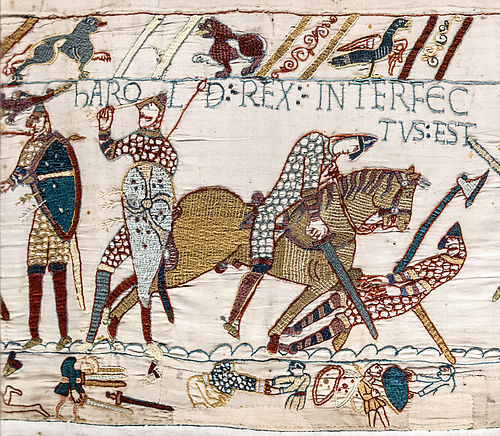
Section of the Bayeux Tapestry showing the final stages of the Battle of Hastings
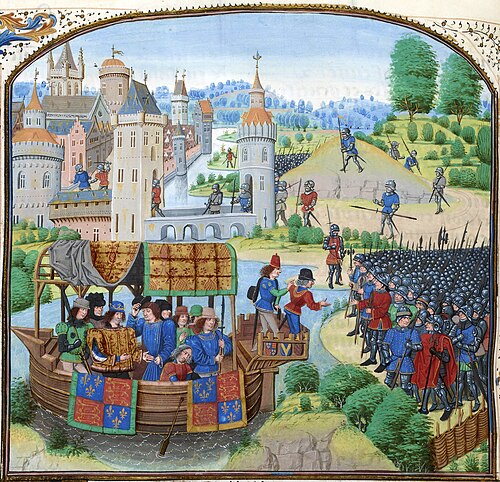
Richard II meets the rebels calling for economic and political reform during the Peasants' Revolt of 1381
Opus Anglicanum
Videos
Opus Anglicanum or English work is fine needlework of Medieval England done for ecclesiastical or secular use on clothing, hangings or other textiles, often using gold and silver threads on rich velve
Section of a 15th-century English chasuble


Embroidered bookbinding for the Felbrigge Psalter in couched gold thread and split stitch, likely worked by Anne de Felbrigge, a nun in the convent of Minoresses at Bruisyard, Suffolk, during the latter half of the fourteenth century.

The Butler-Bowden Cope, 1330–50, V&A Museum

Opus Anglicanum example in the care of the Berne Historical Museum in Switzerland.