Equine nutrition
Videos
Equine nutrition is the feeding of horses, ponies, mules, donkeys, and other equines. Correct and balanced nutrition is a critical component of proper horse care.

Grass is a natural source of nutrition for a horse.

Horses require substantial amounts of clean water every day.

Many commercially prepared vitamin and mineral supplements are available for horses.
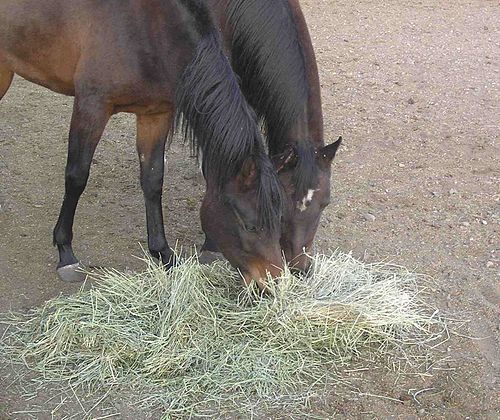
Forages, such as hay, make up the largest portion of the equine diet by weight.
Geriatric horse
Videos
A geriatric horse is an equine that has a physical and mental decline, which generally prevents it from being used for most equestrian activities. The age of a geriatric horse could vary according to breed and riding use, with old age occurring more rapidly in Thoroughbred sport horses than in hardy ponies. Geriatric horse signs include tooth eruption, whitening of certain areas of the head, arching of the back and stiffness of locomotion. The animal also becomes more sensitive to the passing of the seasons.

Horse showing many geriatric signs, including white hair on head, shaggy coat and arched back.

Taxidermized head of Old Billy, the world's oldest horse, at the Manchester Museum.

A geriatric pony, ridden by a little girl, that has a lot of white hair on its head.

Winter coat growth can be modified.