Equirria
Videos
The Equirria were two ancient Roman festivals of chariot racing, or perhaps horseback racing, held in honor of the god Mars, one 27 February and the other 14 March.

Denarius depicting the helmeted head of Mars, with Victory driving a biga on the reverse (issued 88 BC by Gnaeus Cornelius Lentulus Clodianus)
Roman festivals
Videos
Festivals in ancient Rome were a very important part of Roman religious life during both the Republican and Imperial eras, and one of the primary features of the Roman calendar. Feriae were either pub
Equirria
…The Equirria (also as Ecurria, from equicurria, "horse races") were two ancient Roman festivals of chariot racing, or perhaps horseback racing, held in honor of the god Mars, one 27 February and the other 14 March. The Equirria took place in the…

Piece of the fragmentary Fasti Praenestini for April, showing the Vinalia (VIN) and Robigalia (ROB)

A rare depiction of Roman men wearing the toga praetexta and participating in what is probably the Compitalia
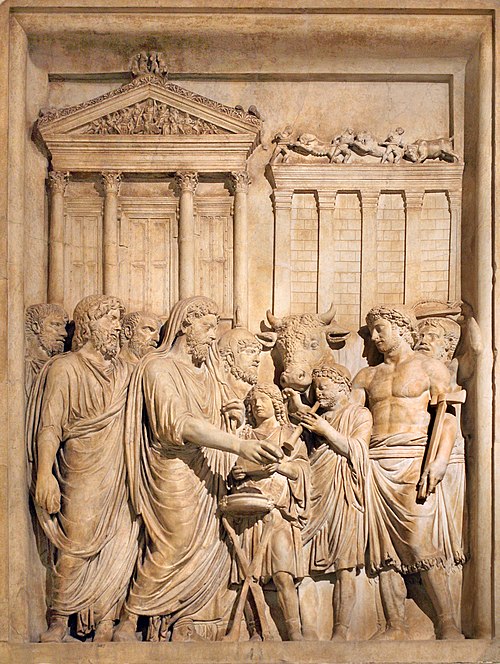
Bas relief from Arch of Marcus Aurelius showing sacrifice