Ethiopia in the Middle Ages
Videos
The history of Ethiopia in the Middle Ages roughly spans the period from the decline of the Kingdom of Aksum in the 7th century to the Gondarine period beginning in the 17th century. Aksum had been a powerful empire during late antiquity, appearing in the Periplus of the Erythraean Sea and mentioned by Iranian prophet Mani as one of the "four great kingdoms on earth", along with the Sasanian Empire of Persia, the Roman Empire, and China's Three Kingdoms. The kingdom was an integral part of the trade route between Rome and the Indian subcontinent, had substantial cultural ties to the Greco-Roman world, and was a very early adopter of Christianity under Ezana of Aksum in the mid-4th century. The use of "Ethiopia" to refer to the region dates back to the 4th century. At its height, the kingdom spanned what is now Eritrea, northern Ethiopia, eastern Sudan, Yemen and the southern part of what is now Saudi Arabia. However, by the 7th century, the kingdom had begun a slow decline, for which several possible political, economic, and ecological reasons have been proposed. This decline, which has been termed the "Post-Aksumite Period", saw extreme loss of territory and lasted until the ascension of the Zagwe dynasty.

The Church of Saint George, one of the Zagwe-era rock-hewn churches at Lalibela.

Debre Damo, a monastery built in the 6th century, shortly before the Post-Aksumite Period.

14th-century illustration depicting the king of Aksum refusing to turn over the Muslims to authorities from Mecca.

Illuminated manuscripts in the 16th-century Ura Kidane Mehret church.
Kingdom of Aksum
Videos
The Kingdom of Aksum also known as the Kingdom of Axum, or the Aksumite Empire, was a kingdom in East Africa and South Arabia from classical antiquity to the Middle Ages. Based in what is now northern Ethiopia and Eritrea, and spanning present-day Djibouti and Sudan, it extended at its height into much of South Arabia during the reign of Kaleb of Axum.

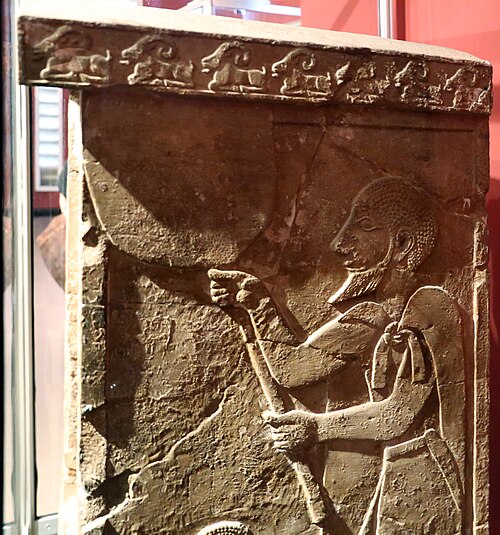
An Axumite stela

The Obelisk of Axum