Eugeneodontida
Videos
Photos
The Eugeneodontida, sometimes also called Eugeneodontiformes, is an extinct and poorly known order of cartilaginous fishes. They possessed "tooth-whorls" on the symphysis of either the lower or both jaws and pectoral fins supported by long radials. They probably lacked pelvic fins and anal fins. The palatoquadrate was either fused to the skull or reduced. Now determined to be within the Holocephali, their closest living relatives are ratfish. The eugeneodonts are named after paleontologist Eugene S. Richardson, Jr. The Eugeneodontida disappeared in the Early Triassic. The geologically youngest fossils of the group are known from the Sulphur Mountain Formation, Vardebukta Formation and Wordie Creek Formation (Greenland).
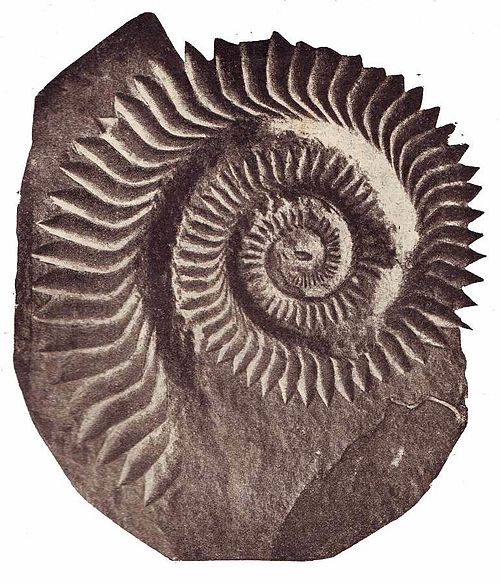
Helicoprion bessonovi, teeth at the front of the lower jaw (reversed for more natural position)

Helicoprion bessonovi, hypothetical reconstruction
Chondrichthyes
Videos
Photos
Chondrichthyes is a class of jawed fish that contains the cartilaginous fish or chondrichthyians, which all have skeletons primarily composed of cartilage. They can be contrasted with the Osteichthyes or bony fish, which have skeletons primarily composed of bone tissue. Chondrichthyes are aquatic vertebrates with paired fins, paired nares, placoid scales, conus arteriosus in the heart, and a lack of opecula and swim bladders. Within the infraphylum Gnathostomata, cartilaginous fishes are distinct from all other jawed vertebrates.

Chondrichthyes

Image: Myliobatis aquila sasrája

Image: Sphyrna mokarran at georgia

Image: Hornhai (Heterodontus francisci)