During the Age of Discovery, a large scale colonization of the Americas, involving a number of European countries, took place primarily between the late 15th century and early 19th century. The Norse

Christopher Columbus and his crew are landing in the West Indies, on an island named San Salvador, on October 12, 1492.

The Discovery of America (Johann Moritz Rugendas)
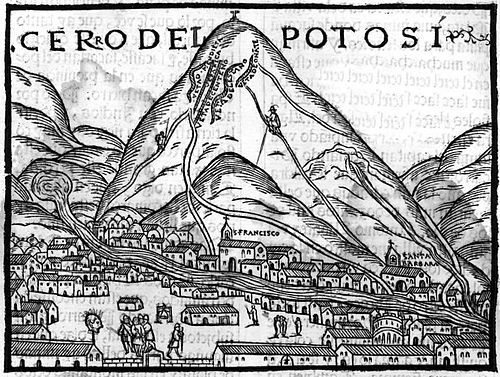
The silver mountain of Potosí, in what is now Bolivia. It was the source of vast amounts of silver that transformed the world economy.

Discovery of Brazil
Between 1492 and 1504, the Italian explorer and navigator Christopher Columbus led four transatlantic maritime expeditions to the Americas in the name of the Catholic Monarchs of Spain. These voyages
European colonization of the Americas
…near the northern tip of Newfoundland circa 1000 AD. However, due to its long duration and importance, the later colonization by Europeans, after Christopher Columbus's voyages, is better known. During this time, the European colonial empires of Spain, Portugal, Great Britain, France, Russia, the Netherlands, Denmark, and…

Handwritten notes by Christopher Columbus on the Latin edition of Marco Polo's Le livre des merveilles

Church of Saint George the Martyr in Palos de la Frontera

Archaeological remains of the historic Port of Palos de la Frontera, from where Columbus's first voyage departed

Port of Moguer and shipyards of La Niña