Fürst
Videos
Fürst is a German word for a ruler as well as a princely title. Fürsten were, starting in the Middle Ages, members of the highest nobility who ruled over states of the Holy Roman Empire and later its
Fürst zu Putbus, arms with a mantle and Fürsten crown.

House of Liechtenstein
Videos
The House of Liechtenstein, from which the principality takes its name, is the family which reigns by hereditary right over the principality of Liechtenstein. Only dynastic members of the family are e
Fürst
…armorial protocols, but simply heraldic grace. Mediatised Fürsten headpiece used in heraldry. Fürst zu Putbus, arms with a mantle and Fürsten crown. Fürst von Liechtenstein, arms with a mediatised Fürsten headpiece. Fürst von Schwarzburg, arms with a Fürsten crown. Other uses in German Fürst is used more generally in German…

The former administrative building of the Governors of Liechtenstein in Feldkirch, Austria

Hans-Adam I, Prince of Liechtenstein (1662–1712), acquired the territory of the Principality
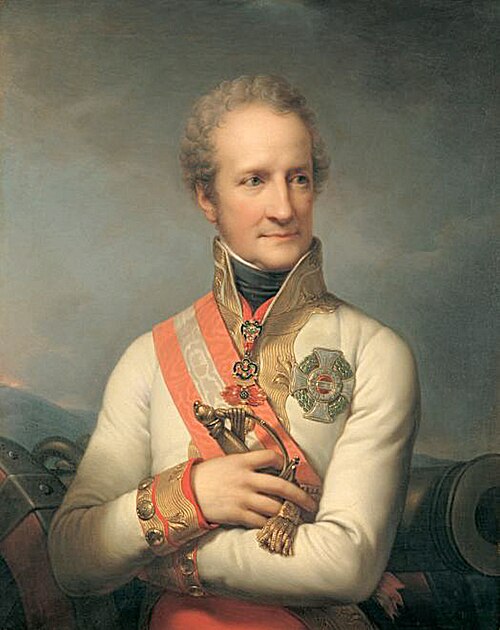
Johann I Joseph, Prince of Liechtenstein (1760–1836), the last prince to rule under the Holy Roman Empire and the first ruler of a sovereign state from 1806

Johann II, Prince of Liechtenstein (1840–1929), allied the principality with Switzerland after the downfall of the Habsburg monarchy in 1918