False hero
Videos
Photos
The false hero is a stock character in fairy tales, and sometimes also in ballads. The character appears near the end of a story in order to claim to be the hero or heroine and is usually of the same sex as the hero or heroine. The false hero presents some claim to the position. By testing, it is revealed that the claims are false, and the hero's true. The false hero is usually punished, and the true hero takes their place.

Cinderella is tested to distinguish her from her stepsisters, the false heroes
Fairy tale
Videos
Photos
A fairy tale is a short story that belongs to the folklore genre. Such stories typically feature magic, enchantments, and mythical or fanciful beings. In most cultures, there is no clear line separating myth from folk or fairy tale; all these together form the literature of preliterate societies. Fairy tales may be distinguished from other folk narratives such as legends and explicit moral tales, including beast fables. Prevalent elements include dragons, dwarfs, elves, fairies, giants, gnomes, goblins, griffins, merfolk, monsters, talking animals, trolls, unicorns, witches, wizards, magic, and enchantments.
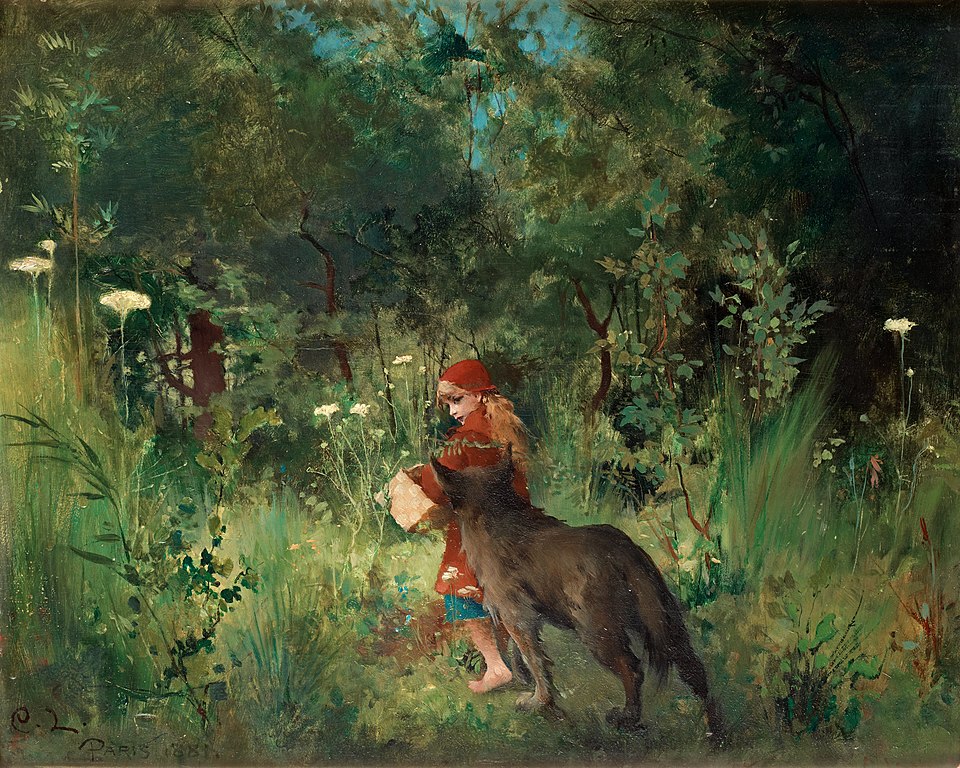
The European fairy tale Little Red Riding Hood and the Wolf in a painting by Carl Larsson in 1881.
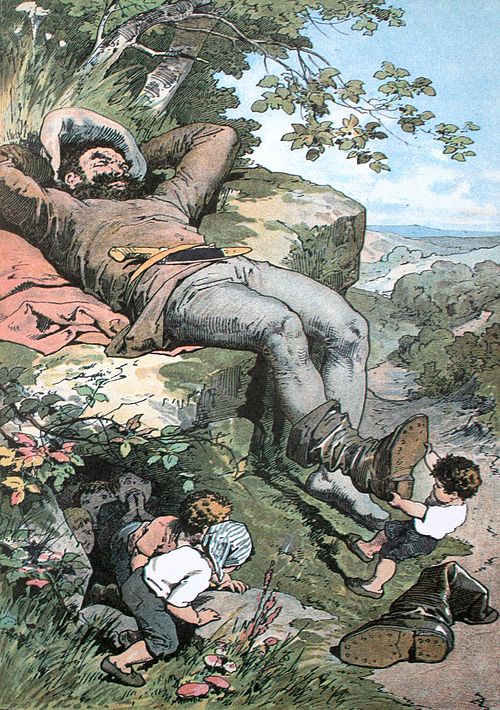
Hop-o'-My-Thumb and the ogre in an 1865 illustration
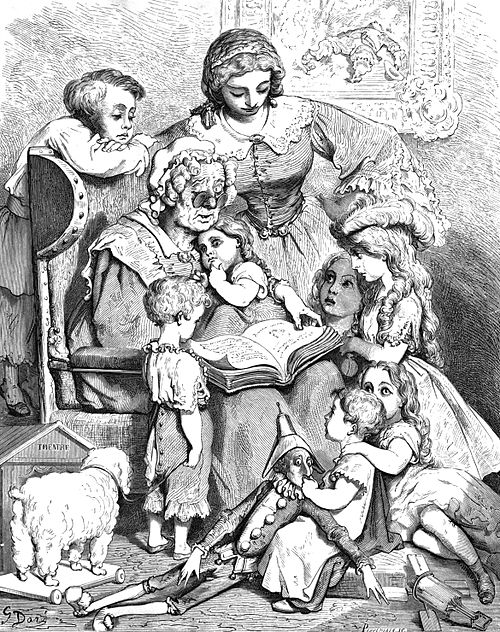
A picture by Gustave Doré of Mother Goose reading written (literary) fairy tales

Ivan Bilibin (1876-1942)'s illustration of the Russian fairy tale about Vasilisa the Beautiful