Famine in India
Videos
Famine has been a recurrent feature of life in the Indian subcontinent countries of India and Bangladesh, most commonly cited as a feature of British rule. Famines in India resulted in millions of dea

Victims of the Great Famine of 1876–78 in India, pictured in 1877

People waiting for famine relief in Bangalore. From the Illustrated London News, 20 October 1877.

Victims of the Great Famine of 1876–1878

A contemporary print of the Madras famine of 1877 showing the distribution of relief in Bellary, Madras Presidency. From the Illustrated London News, (1877)
Great Famine of 1876–1878
Videos
The Great Famine of 1876–1878 was a famine in India under British Crown rule. It began in 1876 after an intense drought resulted in crop failure in the Deccan Plateau. Although the region still produc
Famine in India
…with policy failures, have periodically led to major Indian famines, including the Bengal famine of 1770, the Chalisa famine, the Doji bara famine, the Great Famine of 1876–1878, and the Bengal famine of 1943. Some commentators have identified British government inaction as a contributing factor to the severity of famines during…

Grain destined for export stacked on Madras beaches (February 1877).
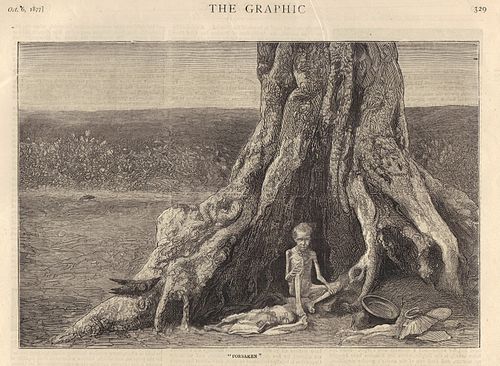
Engraving from The Graphic, October 1877, showing two forsaken children in the Bellary district of the Madras Presidency.

Engraving from The Graphic, October 1877, showing the plight of animals as well as humans in Bellary district.