Farnese Bull
Videos
The Farnese Bull, formerly in the Farnese collection in Rome, is a massive and elaborated Roman copy of a Hellenistic sculpture. It is the largest single sculpture yet recovered from antiquity. Along
The Farnese Bull


Engravings such as this, dated 1633, made the image familiar.

View showing the standing figure of Antiope that is obscured in typical photographs of the sculpture

The Farnese Bull as it was depicted in the Encyclopædia Britannica (11th ed.), v. 12, 1911, Plate I, between pp. 480 and 481 (or pp. 472 and 473 depending on edition), Fig. 51.
The National Archaeological Museum of Naples is an important Italian archaeological museum. Its collection includes works from Greek, Roman and Renaissance times, and especially Roman artifacts from t
Farnese Bull
…largest single sculpture yet recovered from antiquity. Along with the rest of the Farnese antiquities, since 1826 it has been in the collection of the Museo Archeologico Nazionale Napoli in Naples, inv. no. 6002, although in recent years sometimes it is displayed at the Museo di Capodimonte across the city. This sculpture is much restored…

Façade of the museum
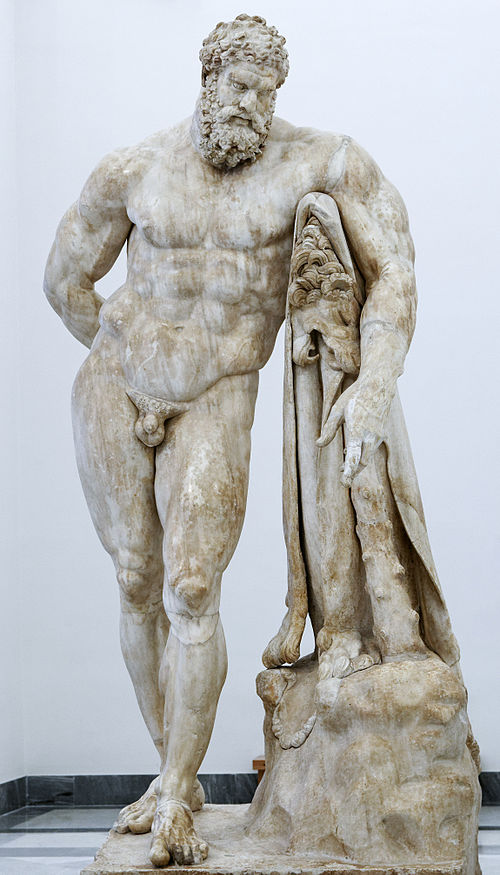
The Farnese Hercules

The Alexander Mosaic, portraying Alexander the Great

Heron and cobra. Ancient Roman fresco from House of Epigrammes, Pompeii (45–79 d.C.), Italy