Fauna of the United States
Videos
The fauna of the United States of America is all the animals living in the contiguous United States and its surrounding seas and islands, the Hawaiian Archipelago, Alaska in the Arctic, and several is

The American bison (Bison bison). Officially recognized by Congress in 2016 as the national mammal of the United States through the National Bison Legacy Act, the bison is not a mere decoration on nickel coins or the Department of the Interior seal, but a true keystone species that shaped the geography, vegetation, and biodiversity of the entire continent for millennia. Unlike any bird or apex predator, the presence of the bison was measured not in thousands, but in tens of millions, an estimated 30 to 60 million once roamed the plains forming the largest concentration of large mammals on Earth before indiscriminate hunting in the 19th century reduced its population to fewer than 1,000 individuals by 1889. Its extraordinary recovery to over 500,000 individuals today represents one of the greatest conservation victories in history. Also chosen as the state animal in places like Wyoming, Kansas, and Oklahoma, and possessing an undeniable spiritual and historical connection to Indigenous nations, the bison physically, biologically, and historically embodies the true strength and scale of the American landscape.
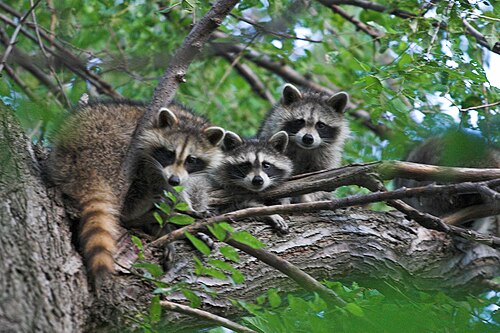
The raccoon is widespread throughout the lower 48 states.

Mountain lions live throughout the western U.S.
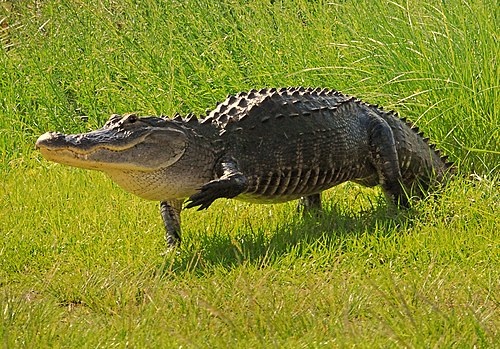
The American alligator is endemic to eight states in the Southeast, and is the official state reptile of Florida, Louisiana and Mississippi.
Cougar
Videos
The cougar, also called puma, mountain lion, catamount, and panther, is a large feline native to the Americas. It inhabits North, Central and South America, making it the most widely distributed wild,
Fauna of the United States
…the Alaskan Aleutian Islands and the California Channel Islands. In most of the contiguous Western U.S., mule deer, white-tailed antelope squirrels, cougars, American badgers, coyotes, hawks and several species of snake and lizard are common. While the American black bear lives throughout the U.S., brown…

Mountain Lion in Glacier National Park

South American cougar at Torres del Paine National Park, in the Chilean part of Patagonia

Cougar skull and jawbone

Front paw print of a cougar