Fencing
Videos
Fencing is a combat sport that features sword fighting. It consists of three primary disciplines: foil, épée, and sabre, each with its own blade and set of rules. Most competitive fencers specialise i
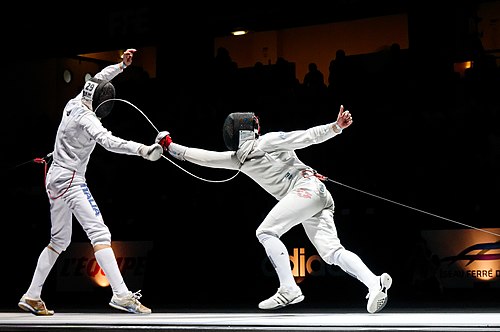
Final of the Challenge Réseau Ferré de France–Trophée Monal 2012, épée world cup tournament in Paris

Fencing School at Leiden University, Netherlands, 1610

1763 fencing print from Domenico Angelo's instruction book. Angelo was instrumental in turning fencing into an athletic sport.

Jacket
Historical European martial arts are martial arts of European origin, particularly using arts formerly practised, but having since died out or evolved into very different forms.
Fencing
…The modern sport gained prominence near the end of the 19th century, evolving from historical European swordsmanship. The Italian school altered the historical European martial art of classical fencing, and the French school later refined that system. Scoring points in a fencing competition is done by making contact with the…

The first page of the Codex Wallerstein shows the typical arms of 15th-century individual combat, including the longsword, rondel dagger, messer, sword-and-buckler, halberd, poleaxe, spear, and staff.

Fol. 4v of the I.33

The final stage of the last sequence in the Royal Armouries Ms. I.33

Longsword guards (1452 manuscript)