Fertilisation of Orchids
Videos
Fertilisation of Orchids is a book by English naturalist Charles Darwin published on 15 May 1862 under the full explanatory title On the Various Contrivances by Which British and Foreign Orchids Are F
The title page of the 1877 edition of Fertilisation of Orchids

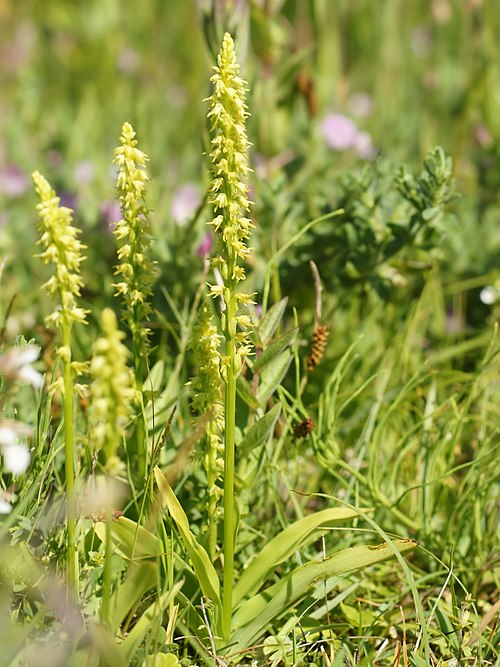
Musk orchids (Herminium monorchis) in grassland

The bee orchid does not have nectar, but its labellum, imitating a female bee, attracts male bees. Darwin found that in northern Europe, it is mostly self-fertilising.
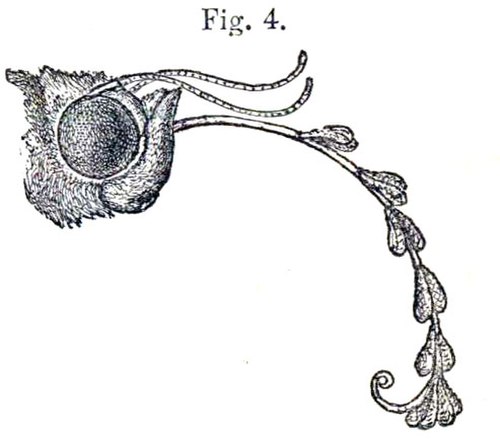
Head of a moth with its proboscis laden with seven pairs of pollinia from Orchis pyramidalis
Pollination of orchids
Videos
The pollination of orchids represents a complex aspect of the biology of this plant family, characterized by intricate flower structures and diverse ecological interactions with pollinator. Notably, t

The shapes, colors and fragrances of orchids are the result of their coevolution with pollinators. Pictured is a flower Coryanthes leucocorys, species that has evolved one of the most fascinating mechanisms of attracting pollinators by means of a liquid-filled pouch.

Pollinia of an orchid of the genus Phalaenopsis in lateral view

Pollinium of Phalaenopsis

Cattleya labiata flower, a plant native to Brazil