First Battle of the Marne
Videos
The First Battle of the Marne or known in France as the Miracle on the Marne was a battle of the First World War fought from 5 to 12 September 1914. The German army invaded France with a plan for winn
German soldiers (wearing distinctive pickelhaube helmets with cloth covers) on the front line at the First Battle of the Marne.


9 September 1914. The BEF (brown) and French 5th army (red) exploit the gap between the German 1st and 2nd armies.

French infantry charge, 1914

Taxi cab of the Marne
Battle of Mons
Videos
The Battle of Mons, or the First Battle of Mons to differentiate it from another battle later in the war, was the first big engagement of the British Expeditionary Force in the First World War. It was
First Battle of the Marne
…by occupying Paris and destroying the French and British armies. The Germans had initial successes in August. They were victorious in the Battles of Mons and the Frontiers and overran a large area of northern France and Belgium. In what is called the Great Retreat the Germans pursued the retreating French…

Royal Fusiliers resting in the town square at Mons before the Battle of Mons. The Royal Fusiliers faced some of the worst fighting in the battle and earned the first Victoria Cross of the war.
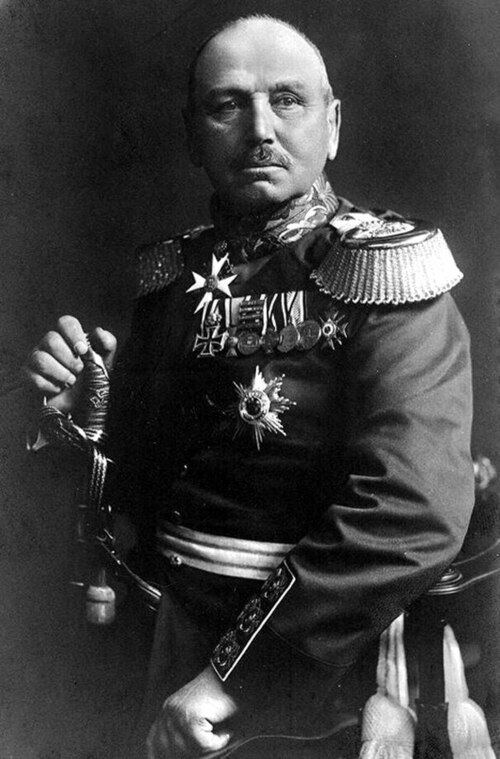
Alexander von Kluck, commander of the German 1st Army at Mons

Lieutenant Maurice Dease, 4th Battalion, Royal Fusiliers, was awarded a posthumous Victoria Cross, the first of the war.

Sidney Godley VC