First Fitna
Videos
The First Fitna was the first civil war in the Islamic community. It led to the end of the Rashidun Caliphate and the establishment of the Umayyad Caliphate. The civil war involved three main factions

Combat between the forces of Ali and Mu'awiya during the Battle of Siffin, from the Tarikhnama
Kharijites
Videos
The Kharijites were an Islamic sect which emerged during the First Fitna. The first Kharijites were supporters of Ali who rebelled against his acceptance of arbitration talks to settle the conflict wi
First Fitna
…the fourth Rashidun caliph Ali, the Uthmaniyya (partisans of the slain caliph Uthman led primarily by Aisha and Mu'awiya I), and, from 657 onward, the Kharijites, who seceded from Ali's camp following the arbitration at Siffin. The roots of the first civil war can be traced back to the assassination of the second…

Persian miniature, likely depicting Ali at the Battle of Siffin, created in Safavid Iran, dated 1516

The Battle of Nahrawan; an Ottoman miniature painting from 16th/17th century
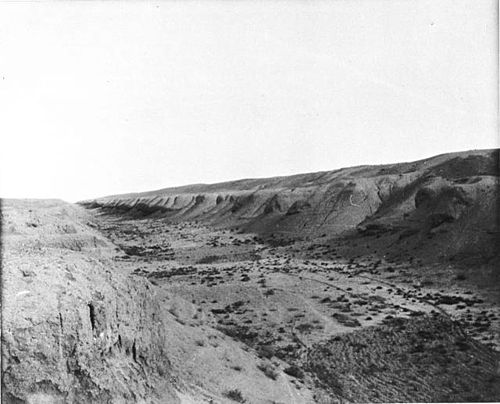
A 1909 photograph of the Nahrawan Canal

Arab-Sasanian dirham of the Azariqa leader Qatari ibn al-Fuja'a, struck circa 694–695, with the Kharijite slogan la hukma illa li-llah on the obverse margin