Flag of Japan
Videos
The national flag of Japan is a rectangular white banner with a red circle at its center. The flag is officially called the Nisshōki, but is more commonly known in Japan as the Hinomaru. It embodies t

The fleet of Kuki Yoshitaka in 1593
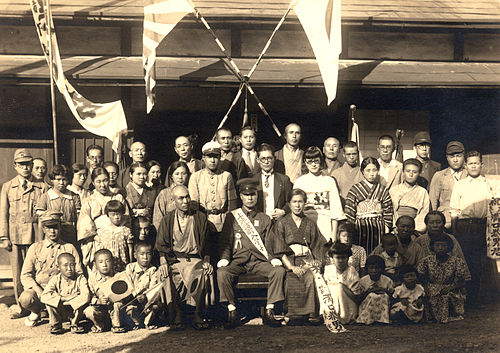
1930s photo of a military enrollment. The Hinomaru displayed on a house and held by several children.

Propaganda poster promoting harmony among Japanese, Chinese, and Manchu. The caption in Chinese (read right to left) reads "With the cooperation of Japan, China, and Manchukuo, the world can be in peace".

The Hinomaru being raised at the United Nations headquarters in New York City in 1956
Emperor of Japan
Videos
The Emperor of Japan is the hereditary monarch and head of state of Japan. The emperor is defined by the Constitution of Japan as the symbol of the Japanese state and the unity of the Japanese people,
Flag of Japan
…occupation of Japan after World War II; these restrictions were later relaxed. The sun plays an important role in Japanese mythology and religion, as the Emperor is said to be the direct descendant of the Shinto sun goddess Amaterasu, and the legitimacy of the ruling house rested on this divine appointment. The…

Emperor Naruhito 201905

Emperor Akihito and Empress Michiko seated in the Chamber of the House of Councillors of the National Diet, with members of the Imperial Family, the Cabinet, and Prime Minister Naoto Kan giving the government's speech in front of the assembled members of parliament (2010).

Utakai Hajime poetry competition, chaired by Emperor Shōwa and Empress Kōjun (1950)

The first arrival of Emperor Meiji to Edo (1868)