Flame structure
Videos
A flame structure is a type of soft-sediment deformation that forms in unconsolidated sediments. The weight of an overlying bed forces an underlying bed to push up through the overlying bed, generally

Flame structures in a sandy turbidite. Cozy Dell Formation, Topatopa Mountains, California.

Section of hand sample of dolomitic siltstone showing a flame structure at top. From I-71, exit 28, Kentucky. Probably Upper Ordovician Saluda Dolomite.
Stratum
Videos
In geology and related fields, a stratum is a layer of rock or sediment characterized by certain lithologic properties or attributes that distinguish it from adjacent layers from which it is separated
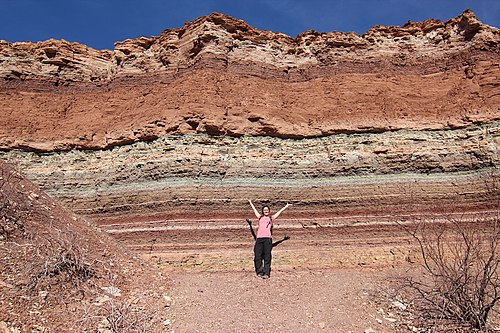
Strata in Salta (Argentina)

Goldenville strata in quarry in Bedford, Canada. These are Middle Cambrian marine sediments. This formation covers over half of Nova Scotia and is recorded as being 8,800 m (29,000 ft) thick in some areas.

The Permian through Jurassic strata in the Colorado Plateau area of southeastern Utah demonstrate the principles of stratigraphy. These strata make up much of the famous prominent rock formations in widely spaced protected areas such as Capitol Reef National Park and Canyonlands National Park. From top to bottom: Rounded tan domes of the Navajo Sandstone, layered red Kayenta Formation, cliff-forming, vertically jointed, red Wingate Sandstone, slope-forming, purplish

Strata on a mountain face in the French Alps