Flemish painting
Videos
Flemish painting flourished from the early 15th century until the 17th century, gradually becoming distinct from the painting of the rest of the Low Countries, especially the modern Netherlands. In th
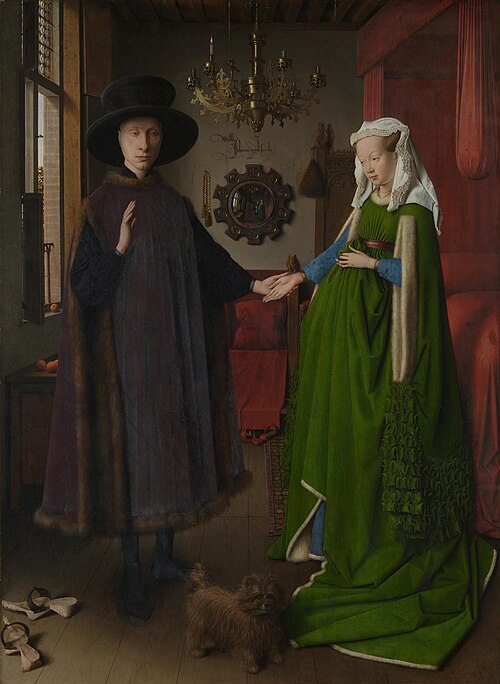
The Arnolfini Portrait by Jan van Eyck, 1434

Peter Paul Rubens, self-portrait
Flemish Baroque painting
Videos
Flemish Baroque painting was a style of painting in the Southern Netherlands during Spanish control in the 16th and 17th centuries. The period roughly begins when the Dutch Republic was split from the
Flemish painting
…became the centre, covers the period up to about 1580 or later, by the end of which the north and south Netherlands had become politically separated. Flemish Baroque painting was especially important in the first half of the 17th century, dominated by Rubens. In theory the term does not refer to modern Flanders but to the…

Peter Paul Rubens, The Raising of the Cross, c. 1610–1611

Frans Hogenberg, the Calvinist Iconoclastic Riot of August 20, 1566 when many paintings and church decorations were destroyed and subsequently replaced by Late Northern Mannerist and Baroque artists.

Peter Paul Rubens and Frans Snyders, Prometheus Bound, 1611–12. Philadelphia Museum of Art. This painting is Flemish Baroque example of collaboration and specialization. Snyders, who specialized in animals, painted the eagle while Rubens painted the figure of Prometheus.

Frans Francken the Younger, Preziosenwand (Wall of Treasures), 1636. Kunsthistorischesmuseum, Vienna. This type of painting was one of the distinctly Flemish innovations that developed during the early 17th century.