Flood myth
Videos
A flood myth or a deluge myth is a narrative in which a great flood—usually sent by one or more deities—destroys civilization, typically as an act of divine retribution. Parallels are often drawn betw
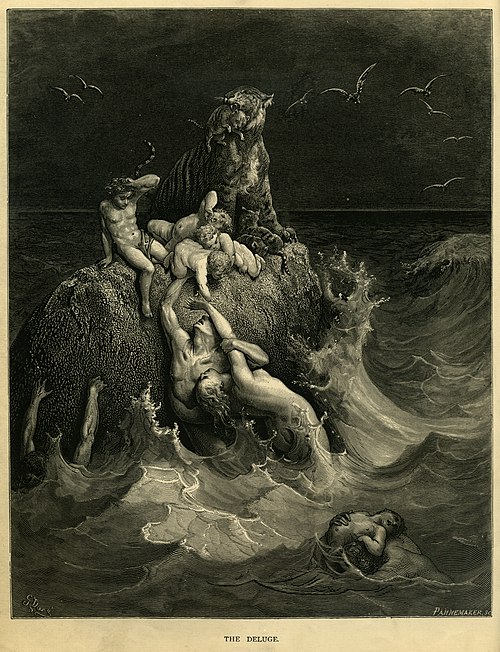
"The Deluge", frontispiece to Gustave Doré's illustrated edition of the Bible

George Smith, who discovered and translated the Epic of Gilgamesh

The Eve of the Deluge, by John Martin, 1840. Depicts a comet causing the Great Flood.

Matsya-avatara of Lord Vishnu pulls Manu's boat after having defeated the demon.
Epic of Gilgamesh
Videos
The Epic of Gilgamesh is an epic from ancient Mesopotamia that is the world's oldest surviving example of narrative literature. The literary history of Gilgamesh begins with five Sumerian poems about
Flood myth
…the biblical Genesis flood narrative, manvantara-sandhya in Hinduism, Deucalion in Greek mythology, and in Indigenous North American cultures. The Epic of Gilgamesh (c. 2100–1800 BCE) tells the story of a massive flood from which only a single human family survives – a narrative that, according to current research…
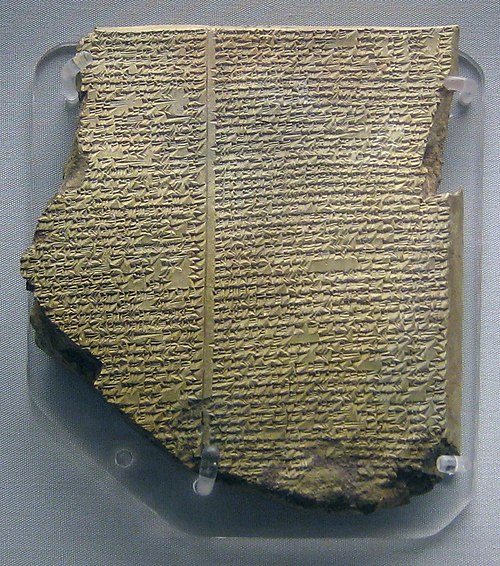
The Deluge tablet of the Gilgamesh epic in Akkadian

Ancient Assyrian statue currently in the Louvre, possibly representing Gilgamesh

Enkidu, Gilgamesh's friend. From Ur, Iraq, 2027–1763 BC, Iraq Museum

The Gilgamesh Dream tablet. From Iraq. Middle Babylonian Period, First Sealand Dynasty, 1732–1460 BCE. Iraq Museum, Baghdad. This dream tablet recounts a part of the epic of Gilgamesh in which the hero (Gilgamesh) describes his dreams to his mother (the goddess Ninsun), who interprets them as announcing the arrival of a new friend, who will become his companion.