In the sport of association football, a forward is an outfield position which primarily plays further up the pitch than midfielders and defenders. As with any attacking player, the role of the forward

Marcus Rashford (no. 11, in white) is 1 on 1 against Hossein Hosseini (no. 24, in blue) and is attempting to score. The goalkeeper will try to stop the forward from scoring a goal by preventing the ball from passing the goal line.
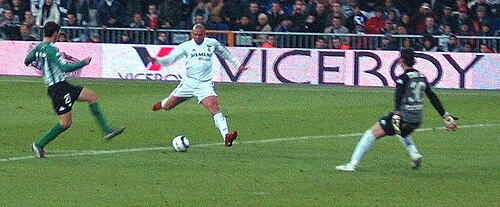
Brazilian striker Ronaldo (middle, in white) taking a shot at goal. A multi-functional forward, he has influenced a generation of strikers who followed.

Gabriel Batistuta holding his old number 9 Fiorentina jersey. The number most associated with the position, he was an out-and-out striker.

Wayne Rooney, shown wearing the number 10 jersey, was used at Manchester United as a second striker on many occasions, playing behind the number 9.
Lionel Messi
Videos
Lionel Andrés "Leo" Messi is an Argentine professional footballer who plays as a forward for and captains Major League Soccer club Inter Miami. Widely regarded as one of the greatest players in histor
Forward (association football)
…at Juventus, Youri Djorkaeff at Inter Milan, or Teddy Sheringham at Tottenham Hotspur. Other creative offensive players who play further back, such as Lionel Messi, Diego Maradona, Ronaldinho, Kaká, Rivaldo, Michael Laudrup, and Zinedine Zidane are often instead described as the "number 10", and usually operate…

Messi with Argentina in 2026

At age 13, Messi enrolled at Barcelona's youth academy, La Masia.
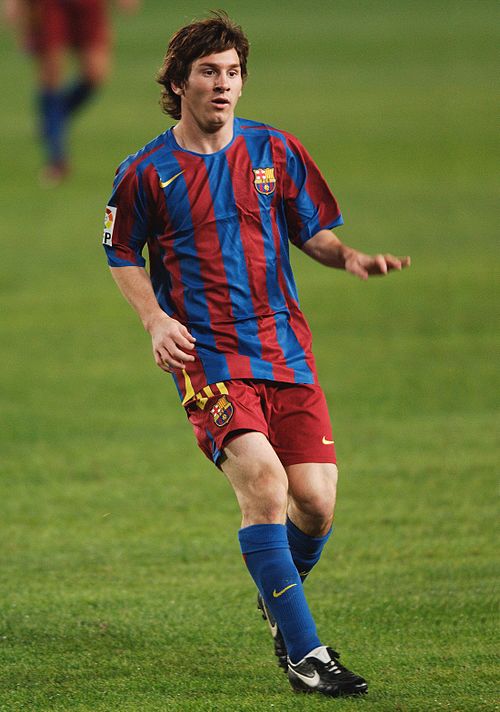
In 2004, Messi (pictured in 2005) began his 17-year professional career with FC Barcelona

Messi dribbling past Patrice Evra of Juventus during the 2015 UEFA Champions League final