The Four Horsemen of the Apocalypse are figures in the Book of Revelation in the New Testament of the Bible, a piece of apocalypse literature attributed to John of Patmos, and generally regarded as da
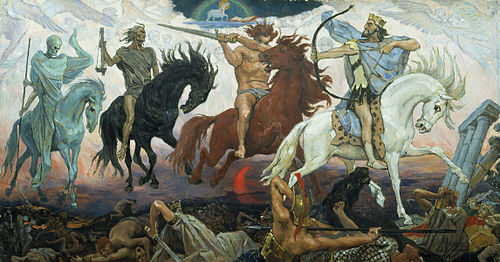
Four Horsemen of the Apocalypse, an 1887 painting by Viktor Vasnetsov. From left to right are Death, Famine, War, and Conquest; the Lamb is at the top.

Marcin Kitz, Four Horsemen of the Apocalypse (1941)

The first Horseman of the Apocalypse as depicted in the Bamberg Apocalypse (1000–1020). The first "living creature" (with halo) is seen in the upper right.

Albrecht Dürer, Knight, Death and the Devil, 1513.
Conquest
Videos
Conquest involves achieving control of another entity's territory through war or coercion. Historically, conquests occurred frequently in the international order, and practical norms hardly governed t
Four Horsemen of the Apocalypse
…written centuries prior. Though the text only provides a name for the fourth horseman, subsequent commentary often identifies them as personifications of Conquest, War, Famine, and Death. Revelation 6 tells of a book or scroll in God's right hand that is sealed with seven seals. The Lamb of God/Lion of Judah opens…

The Triumph of Victory by Peter Paul Rubens (painted c. 1614)

William the Conqueror leads his troops at the Battle of Hastings, 1066, Bayeux Tapestry.

Vasily Vereshchagin, The Apotheosis of War, 1871; dedicated "to all conquerors, past, present and to come", a pile of skulls in a wasteland.

Gari Melchers War Highsmith