Fredmans epistlar
Videos
Fredmans epistlar is a collection of 82 poems set to music by Carl Michael Bellman, a major figure in Swedish 18th century song. Though first published in 1790, it was created over a period of twenty
Frontispiece to the first edition by Johan Tobias Sergel, engraved by Johan Fredrik Martin

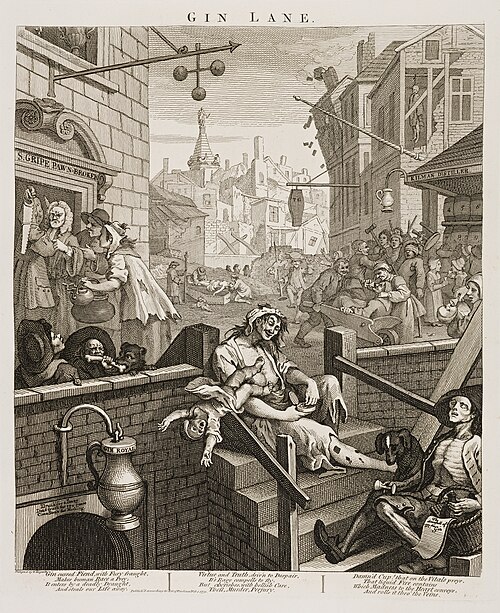
Bellman's artistry in the songs of Fredman's Epistles has been compared with William Hogarth's work as a painter, as here in Gin Lane, 1751.
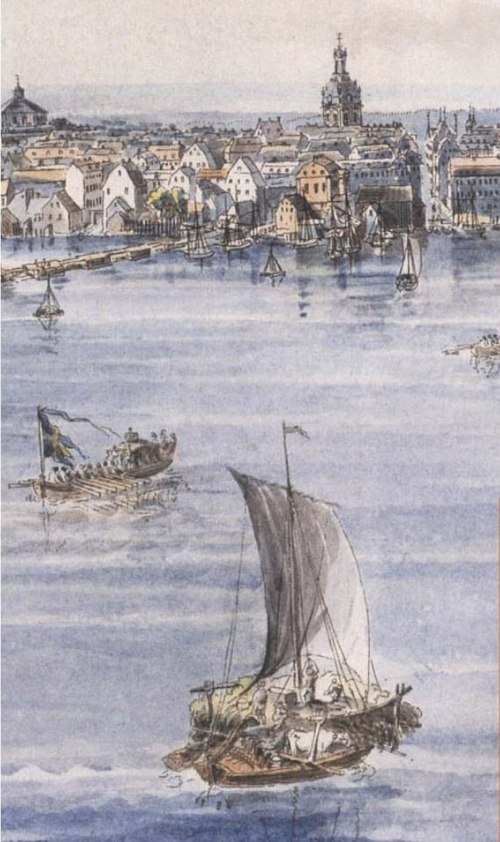
Detail of watercolour by Johan Fredrik Martin of a scene reminiscent of Ulla Winblad's journey back from Lake Mälaren to Stockholm in Epistle No. 48, Solen glimmar blank och trind
![Ep. 45: Mollberg is beaten, his harp broken in the Rostock tavern [sv]](https://upload.wikimedia.org/wikipedia/commons/thumb/1/1a/Krogen_R%C3%A5stock%2C_Elis_Chiewitz.jpg/500px-Krogen_R%C3%A5stock%2C_Elis_Chiewitz.jpg)
Ep. 45: Mollberg is beaten, his harp broken in the Rostock tavern [sv]
Carl Michael Bellman
Videos
Carl Michael Bellman was a Swedish songwriter, composer, musician, poet, and entertainer. He is a central figure in the Swedish song tradition and remains a powerful influence in Swedish music, as wel
Fredmans epistlar
…Fredmans epistlar (English: Fredman's Epistles) is a collection of 82 poems set to music by Carl Michael Bellman, a major figure in Swedish 18th century song. Though first published in 1790, it was created over a period of twenty years from 1768 onwards. A companion…

Bellman playing the cittern, in a portrait by Per Krafft, 1779

Bellman's birthplace, the Stora Daurerska house in Södermalm, Stockholm. Carl Svante Hallbeck, 1861
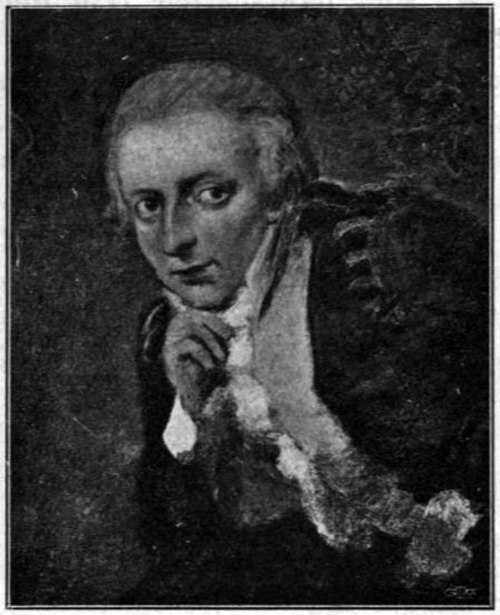
Bellman by Elias Martin, 18th century

The Stockholm house where Bellman lived from 1770 to 1774