French Navy
Videos
The French Navy is the maritime arm of the French Armed Forces and one of the four military service branches of France. It is among the largest and most powerful naval forces in the world recognised a

Battle of Lagos, 1693.
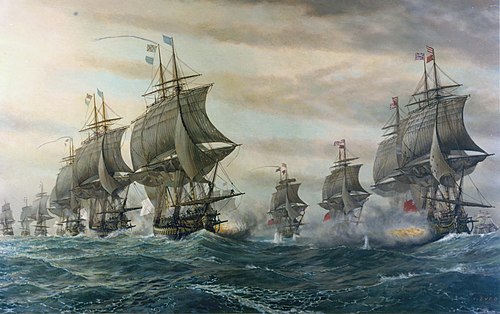
Battle of the Chesapeake, 1781.

Battle of Navarino, 1827.

Battle of the Tagus, 1831.
Charles de Gaulle is the flagship of the French Navy. Commissioned in 2001, the ship is the tenth French aircraft carrier, the first French nuclear-powered surface vessel, and the only nuclear-powered
French Navy
…a significant overseas presence. The French Navy is one of eight naval forces currently operating fixed-wing aircraft carriers, with its flagship Charles de Gaulle being the only nuclear-powered aircraft carrier outside the United States Navy, and one of two non-American vessels to use catapults to launch aircraft…

Charles de Gaulle in 2022

USS Enterprise (top), the first nuclear-powered aircraft carrier, and Charles de Gaulle (bottom), at that time the newest nuclear carrier, both steaming in the Mediterranean Sea on 16 May 2001.

Command bridge of Charles de Gaulle

A rare occurrence of a 5-country multinational fleet of the NATO countries, the Netherlands, France, the United States, Italy, and the United Kingdom, during Operation Enduring Freedom in the Oman Sea