French Revolution
Videos
The French Revolution was a period of political and societal change in France that began with the Estates General of 1789 and ended with the Coup of 18 Brumaire on 9 November 1799. Many of the revolut

The Storming of the Bastille, 14 July 1789
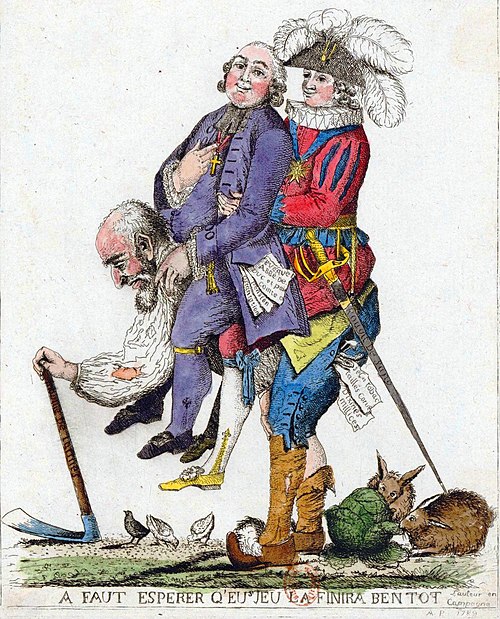
Caricature of the Third Estate carrying the First Estate (clergy) and the Second Estate (nobility) on its back

Le Serment du Jeu de paume by Jacques-Louis David (c. 1791), depicting the Tennis Court Oath

The Storming of the Bastille on 14 July 1789; the iconic event of the Revolution, still commemorated each year as Bastille Day
Reign of Terror
Videos
The Reign of Terror was a period of the French Revolution when, following the creation of the First Republic, a series of massacres and numerous public executions took place in response to the Federal
French Revolution
…Safety, dominated by radical Jacobins led by Maximilien Robespierre. About 16,000 people were sentenced by the Revolutionary Tribunal and executed in the Reign of Terror, which ended in July 1794 with the Thermidorian Reaction. Weakened by external threats and internal opposition, the Committee of Public Safety was…

Nine émigrés are executed by guillotine, 1793

Historical caricature of the Reign of Terror.

Bertrand Barère by Jean-Louis Laneuville.

The Battle of Fleurus, won by General Jourdan over the Coalition Army led by the Prince of Coburg and William of Orange on 26 June 1794